Ever wonder what a sandbar is? When it’s low tide you can see them, but what happens when the ocean covers them? Most surfers may just look at the waves on the surface, but here we will talk about the ocean floor and prevailing winds that also affect a wave’s journey.
As a bonus we will also talk about the famous Whale Tail here in Uvita, Costa Rica, and answer some questions you have. If you wish to awaken your inner surfer, this is a MUST read overviewing the factors of what creates the waves at the beaches you’re surfing.
What is a Sandbar?
Sandbars are underwater formations of sand created by waves, currents, and shoreline geography. They influence the shoreline by providing protection for habitats, controlling beach erosion, and effect wave patterns.
They can be submerged or partially exposed deposits of sediment built up by waves, currents, and tidal changes. In places like the Florida Keys and the Outer Banks in North Carolina, sandbars can create ocean banks and barrier islands.
At beaches like Playa Chaman here in Uvita, where we take our guests for surf lessons, there are nearshore sandbars or “breakerbars”. The sandbars here have a direct influence on the beach-breaking waves and why they are good for surfing.
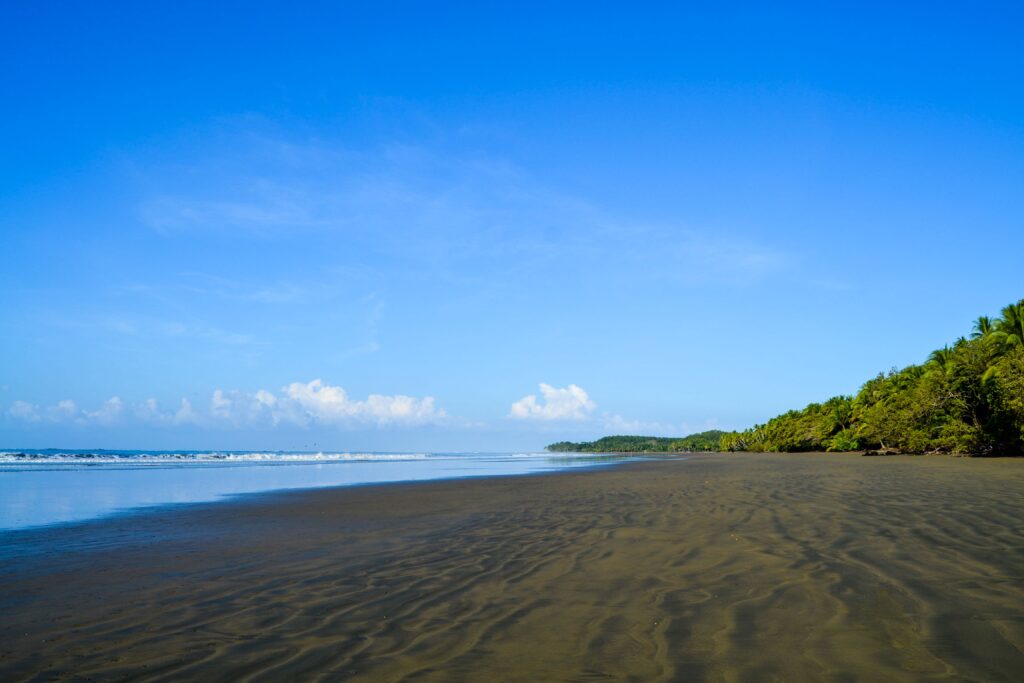
Nearshore sandbars are close to the beach and typically run parallel to the coastline. Sandbars can also connect one landmass to another, this can be seen at the Whale Tail at Marino Ballena National Park.
Ocean Currents like the Rip Currents?
Yes! Rip currents from the waves affect the shape of sandbars. The flowing water receding back into the ocean can give closer sandbars a crescent shape. There are many different kinds of currents in the ocean that move sediment.
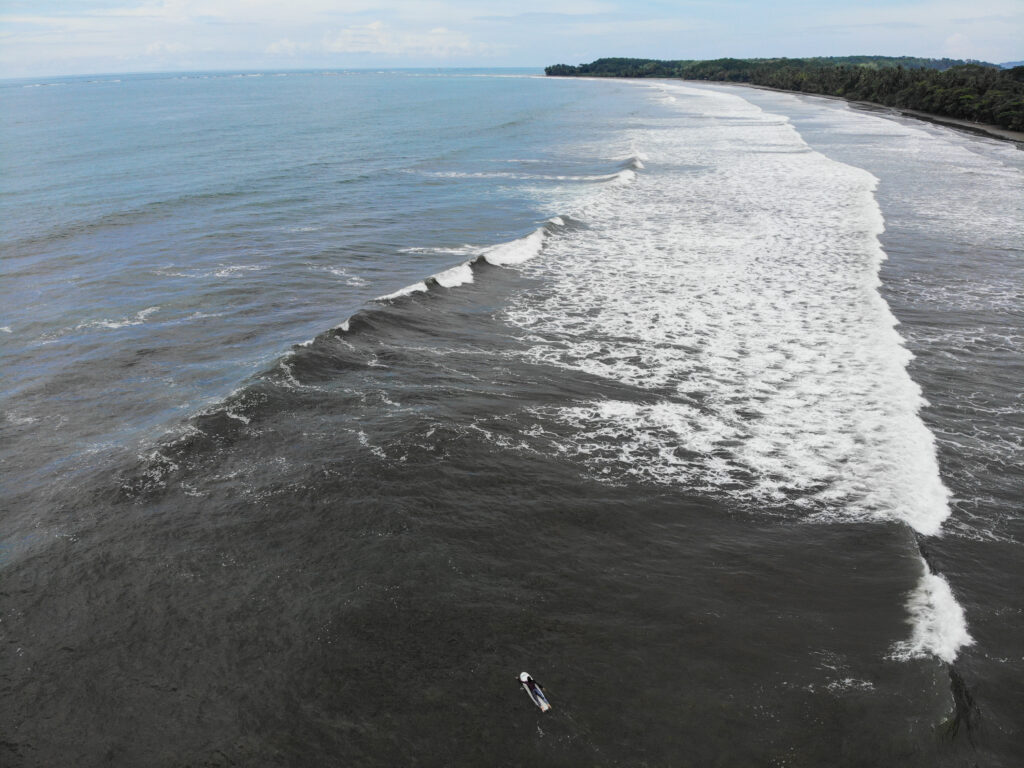
Bay mouths or rivermouths also create sandbars with their currents. There are two small rivers that run through Playa Chaman which affect the sandbars. Check out the area on the satellite view in Google Maps and you can see how the sand forms.
That’s Cool, You Mentioned Surfing Waves?
Right on! The shape of sandbars directly affects how the waves form and break. At Playa Chaman there are more than one shorebreaking sandbars. This means that the size of the waves and the height of the tides can create many surfing opportunities every day.
Here’s an awesome blog if you want to learn more about surf breaks. There you can learn the main types of waves surfers will ride in conjunction with the land formation. Unlike a reef breaking wave, a beach break has sandbars that are always shifting.
Most swell directions are at an angle with beaches like Playa Chaman. The sandbars can create waves that are refracted. Refraction is where the wave literally bends along solid land formations. Sandbars also influence the amount of backwash in waves. This is when a receding wave impedes the next wave about to break. Most of the time backwash is not a surfer’s friend.
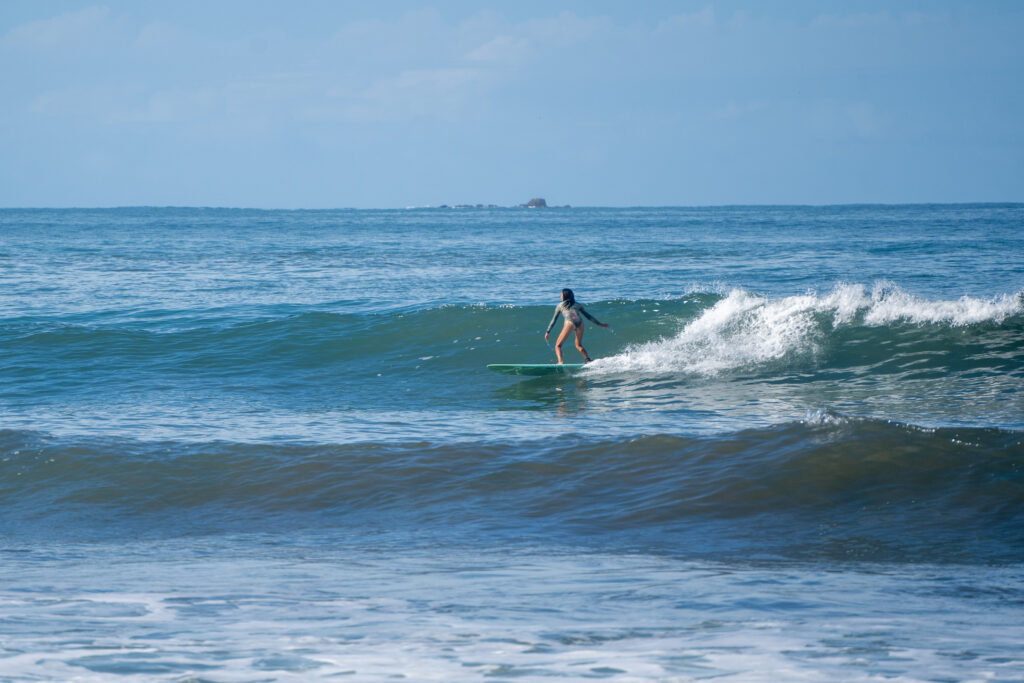
The formation of the sandbars can also show how the swells and waves have been behaving over time. It’s time to get into some nerdy stuff, let’s talk about bathymetry.
In English, Please…
We’ll make this quick. Imagine the sandbars at a typical beach are like ramps under water. As a wave comes into shallower water (wave shoaling), the sandbar pushes the water up until the wave can’t hold its peak.
The wave is now at the top of our sandbar ramp. As the sandbar drops off the wave will break, this is called the plunge point. With waves closing out, this is where you can have a lot of sand floating in the water.
A sandbar’s formation is in equilibrium with how much sand is being pushed by the waves towards the shore as well as how much sand is being brought from the shore. The bigger the waves and stronger the currents, the more sand is being transported. Factors like the slope of beaches and wind direction can also affect sediment movement.
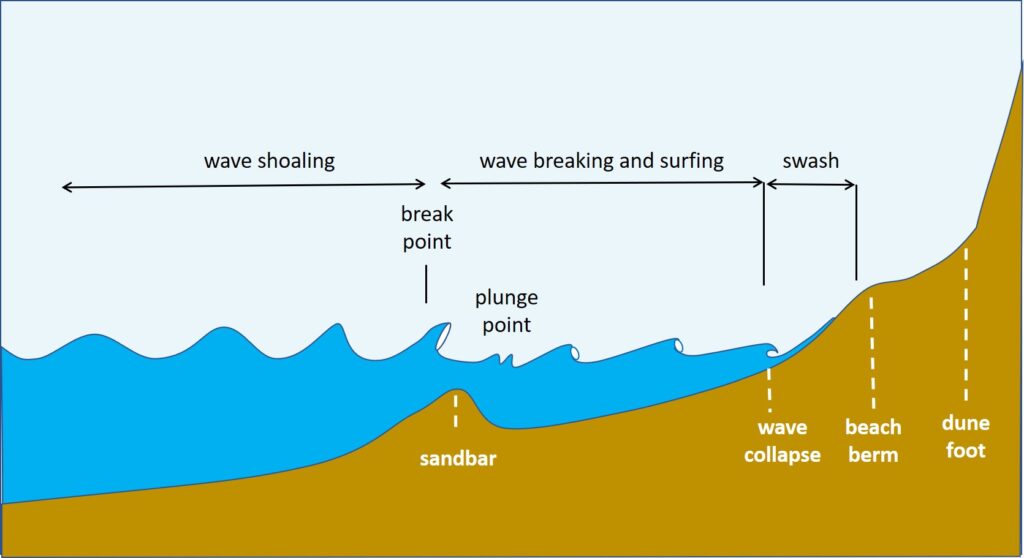
Lastly, one big factor limiting a sandbars size is gravity. Sediment will slide down in conjunction with the weight and movement of the water. Ocean banks and barrier islands form by having too little influence for sand to travel.
To put it all together, sandbars at a typical beach break will migrate onshore or offshore depending on the swell sizes. After weeks of small waves, sandbars can migrate closer to the shore. Once a bigger swell rolls in, these sandbars can move to deeper water. With a beach like Playa Chaman, the sandbars are constantly moving all year long.
Curious About Your Surf Break Back Home?
It’s super important to know about the surf breaks in your area. Many surfers have a few go-to breaks that are within driving distance. Whether you’re making a week-long surf trip or catching a few waves before work, the more you know what’s happening under and above the waves the better.
If you’re curious about what kind of surf break is near you, check out our blog to understand more about the different kinds of breaking waves. There you can also learn a little bit about some waves Costa Rica have to offer close to Bodhi Surf and Yoga.
East Coast vs West Coast
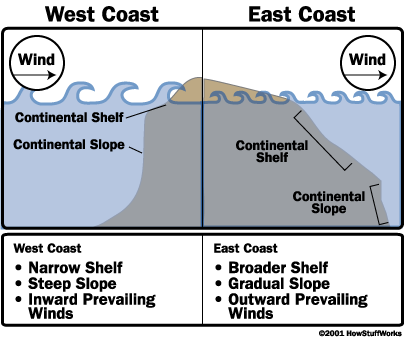
Let’s do a little East Coast versus West Coast comparison. We will compare Ocean Beach in San Diego, California for the West Coast, and Old Orchard Beach in Old Orchard, Maine for the East Coast.
Aside from the location, there’s three big differences between these two beach breaks and the waves they have: the shape of the continental shelf, prevailing winds, and fetch.
The West Coast has a narrow and steep continental shelf. What this means is that there is not a shallow seafloor to slow waves down. Think of the wave as a roller coaster going up its second hill from the first initial drop. All that energy goes up and peaks at the first sandbar. This in turn creates a more powerful wave when it reaches the famous West Coast piers.
This is also why it is not advised to go swimming at Ocean Beach, the waves are powerful, the rips are strong, and the sandbars are constantly shifting. There are even places where ships will deposit sand to artificially build a sandbar to protect beaches and harbor routes.
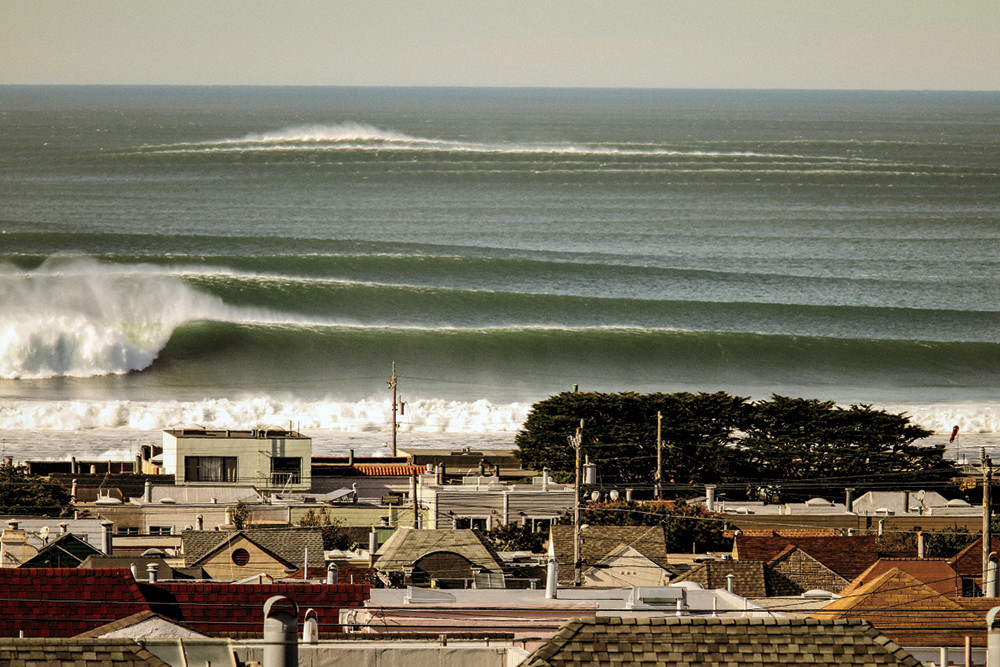
Let’s compare that to Old Orchard Beach in Maine. The East Coast has a much broader continental shelf, in some areas spanning more than three times that of the West Coast. It is a very gradual slope and becomes quite shallow about a mile from the coastline. Within a mile from the beach the water is around 150 feet deep, this is where the famous lobsters like to live.
This shelf creates a very long and gradual slowing of the waves for the East Coast. It’s like the wave is going all the way up a 20-level parking garage. Most of the year there are gentle waves with very flat sandbars that don’t change a lot.
What’s a Prevailing Wind?
Now let’s talk about prevailing winds. They are a predominant wind that is consistently blowing in one direction for a particular place and season. The biggest difference between East and West Coast winds is the direction, strength, and distance in which they travel.
For the West Coast, winds are traveling all the way from Japan. As you may have learned, winds are one major contributor to creating waves. They can push the water’s surface for thousands of miles.
Now, Ocean Beach has an inward prevailing wind, meaning the wind is blowing towards the coast. Because there is such a vast amount of ocean on the pacific side, these winds will push the waves and build them up. It’s like a bulldozer continuously pushing dirt and in front of the plow the pile grows bigger and bigger.
Trying to Make Fetch Happen
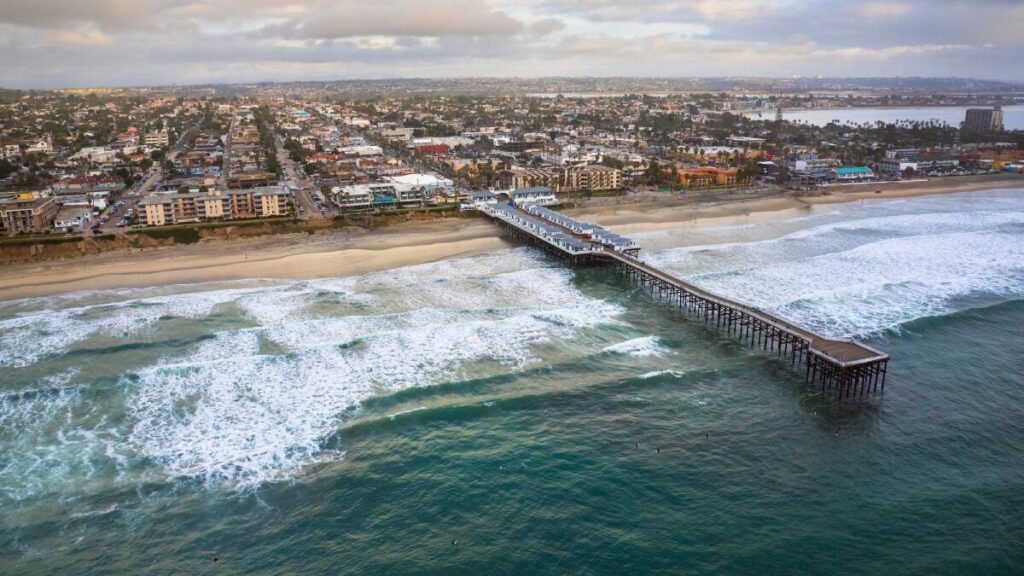
The distance these prevailing winds have from one continent the other is called the fetch. Now imagine this wind bulldozer pushing waves for 5,200 miles across the North Pacific Ocean. There can literally be TONS of water in one wave, look at this famous wave called Mavericks. And not only are the waves getting bigger, because there is no land mass in the way, they are also gaining speed.
Side note: The Hawaiian Islands are basically in the center of the pacific ocean without a continental shelf, this is why the waves there are so huge.
To sum it all up, for the winds coming into the West Coast, they are coming in the direction towards Ocean Beach and also being pushed a very long distance. The waves generate more size and speed because there is no major landmass in the way. Therefore, the waves reaching the shore are epic for surfing and there’s consistent surf all year long.
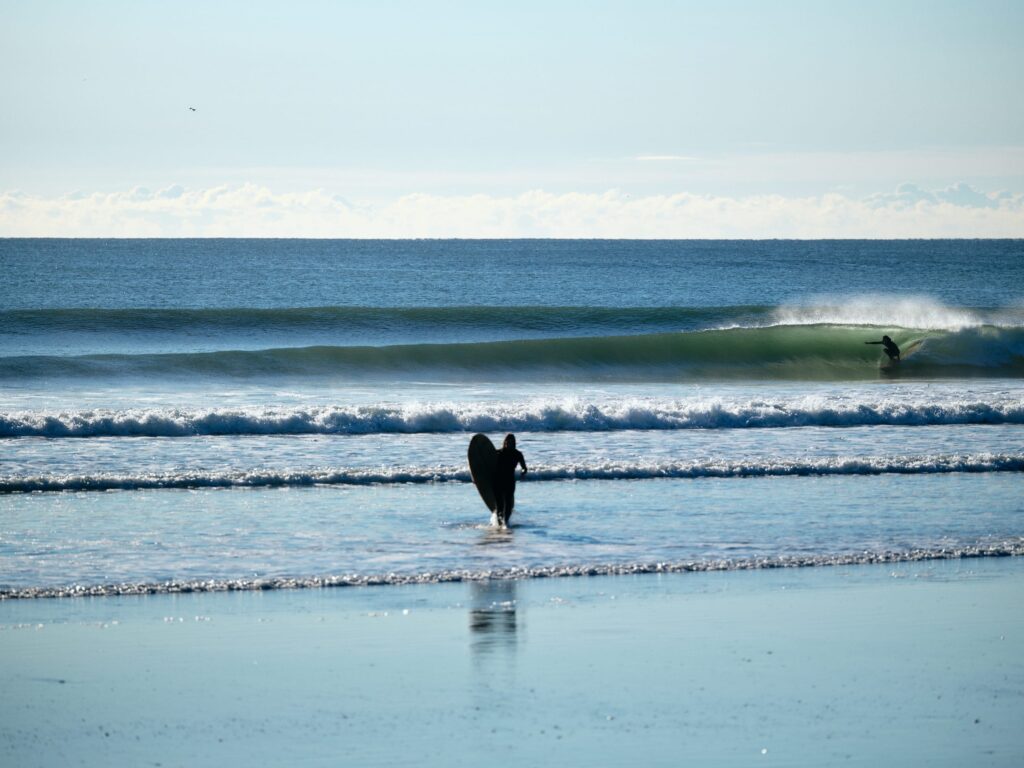
Back to the East Coast
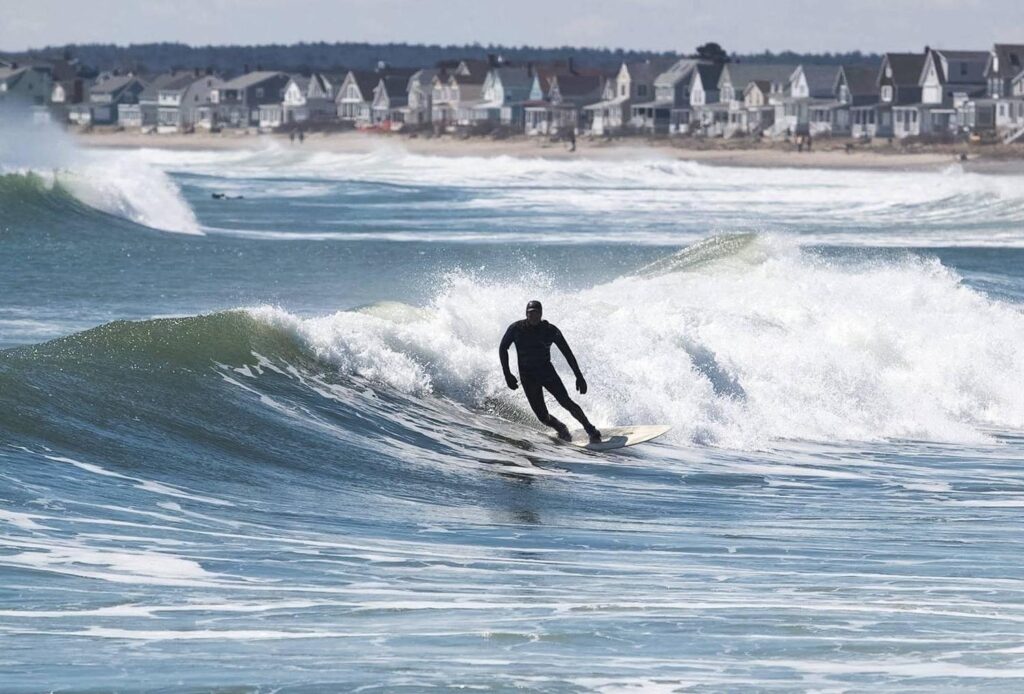
To finish the comparison, let’s look at what Old Orchard Beach has to offer. The prevailing winds are outward facing, meaning they blow away from the shore. Imagine the waves being sail boats and the wind fills up their sails away from the coastline, slowing them down.
The winds are also weaker because the fetch is a very short distance. They are also weaker not only because there is land in the way, but also mountains. The Appalachian Mountain Range is a big buffer from the winds coming across North America.
You may be thinking, “how does the East Coast have any waves?” Which is a fair question. Generally, yes, the East Coast has less powerful waves than the West Coast. There’s a reason why California is famously known for surfing.
The beauty of the East Coast surf scene is when hurricane and Nor’ Easter swells come through. To keep it simple, these are both cyclone storms that can form in the ocean. You may know how hurricanes form in the Caribbean. Think of Nor’Easters like a cold, snowy, winter version of a small hurricane in the Northeast. Skiers and snowboarders love’m.
These storms can bring big swells, and because of everything we learned about the continental shelf and sandbars, Old Orchard Beach can have some magical waves. The shelf slows down the waves to be too big and fast. With the sandbars being very long and gradually sloped, the storm waves can break slowly for a long, glassy surf ride.
The Famous Whale’s Tail in Uvita
With all this talk about sandbars and bathymetry, we have to talk about Uvita’s most popular attraction: Cola de la Ballena, or the Whale’s Tail (below). It’s one of the most unique land formations Costa Rica has to offer. For us surfers in the area, it COULD make a wonderful wave, but we’ll get into that later.
The Whale’s Tail is the main attraction of the Marino Ballena National Park. Thousands of people walk its sandbar and rocky shoreline. It is a natural formation that literally looks like a whale tail.
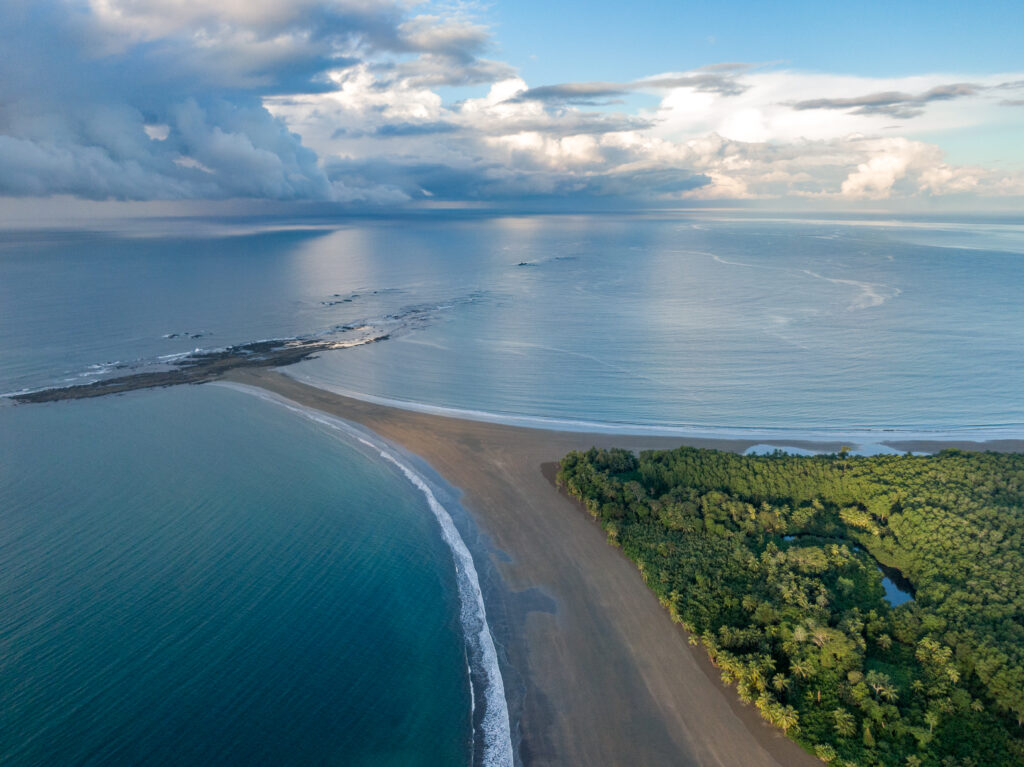
There’s only a handful of places in the world that have a sandbar called a Tombolo. This where a sandbar connects two landmasses together, typically an island to a mainland or island to island.
The fantastic part about the Whale’s Tail here is that the “fluke” part of the tail is a sandbar that disappears during high tide. This part of the tail is about 600 meters (656 yards) long where you can see waves coming together from the left and the right.
Two ocean currents meet together to create this formation. The tail extends even further underwater. The small islands such as Tres Hermanas, Isla Ballena, and King’s Rock, are all connected. This means that the tail extends for a few miles horizontally.
If you plan to visit the Whale’s Tail to traverse the magical passage, it’s best to go during low tide. Depending on the swell size, it’s good to give yourself a two hour window before or after low tide to enjoy the passage and tail. If you’re looking for more Things To Do in Marino Ballena National Park, don’t worry, there’s plenty for a full beach day.
The whole tail is considered a sandbar, even the parts that are underwater. This creates a small barrier to weaken the strong ocean waves coming in. Not only is it good for surfing waves, but it is also amazing for whale migration and mating.
Check out our Ultimate Guide to Whale Watching in Uvita, Costa Rica. There you will learn all about whale watching in the area from the seasons to other aquatic animals you’ll see. You will also find links to book your tour while you stay in Uvita.
For our golden hour photographers, the dry season has the sun setting right in front of the tail, making it a serene sunset photo opportunity. Here’s 10 Breathtaking Photos From the Marino Ballena National Park to check out.
The Big What If…
As you may have learned with different surf breaks, surfers LOVE a good point break. There are plenty of local surfers who surf at Playa Chaman in the national park who have all fantasized of this big “what if.”
The Whale Tail does not work for surfing because the fluke has a natural wall of big rocks that block the waves. This is why the tombolo that appears at low tide is able to exist for people to walk on and enjoy.
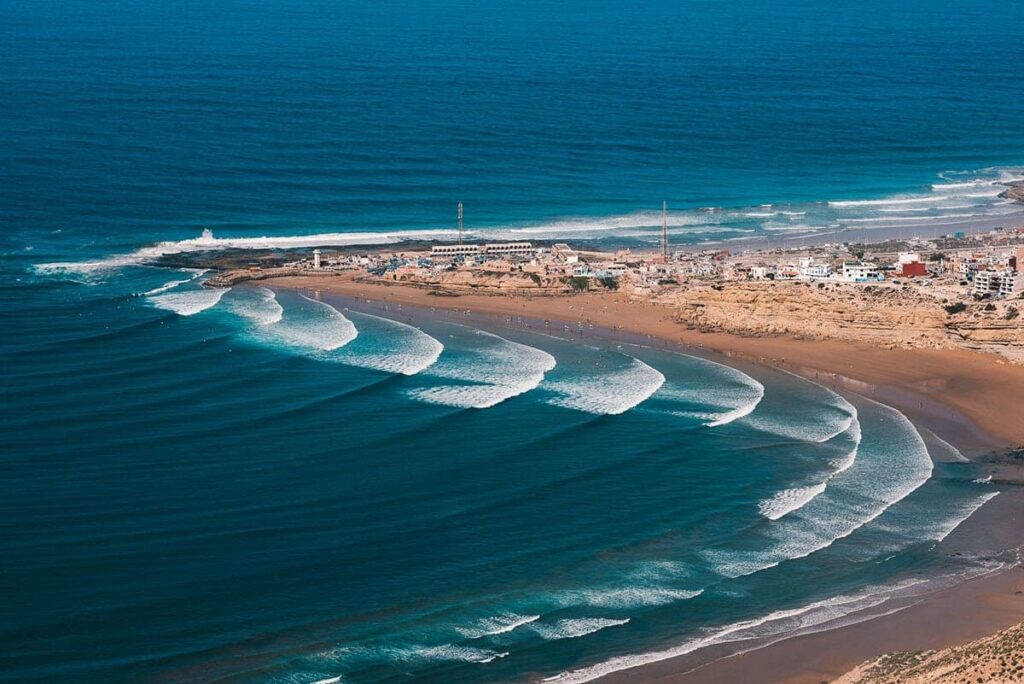
This will never happen anytime soon, but if the right and left fluke of the Whale Tail disappeared, there would be an amazing point breaking wave. Imagine a straight peninsula with waves breaking on either side. Both goofy and regular footers would have their dream waves in a protected national park, where the backdrop view is green palm trees and mangroves.
This “new” peninsula would be similar to that of Magic Bay in Imsouane, Morocco. Here you can see the waves cascading in one after the other. But, hey, there’s plenty of beaches and point breaks all over Costa Rica to catch good waves.
Bringing It All Together
To recap, sandbars are an integral part of beaches and the waves they create. They help protect beaches as well as marine wildlife and vegetation.
They are always changing and moving with different swells in the ocean. This is why at Playa Chaman you can always find a wave to surf all year long. Especially at low tide, sandbars can show you where the rip currents are when high tide comes around.
The ocean floor, winds, and the distance both wind and waves travel are big factors for wave size and power. Continental shelves can be very complex with peaks, valleys, ravines, and trenches. With the United States as just one example, all of this contributes to how a wave forms and breaks to the shoreline at your surfing destination.
Punta Uvita, the whale tail formation part of Marino Ballena National Park, is a fantastic place to visit, especially with your stay at Bodhi Surf and Yoga! Typically, our guests will go to the whale tail after their surfing lesson. They can walk the beach to experience more of the park.
Curious about what to expect during your stay at Bodhi Surf and Yoga? Here’s a great presentation about your job and our job. Spoiler alert: your job is to have the best vacation experience possible!
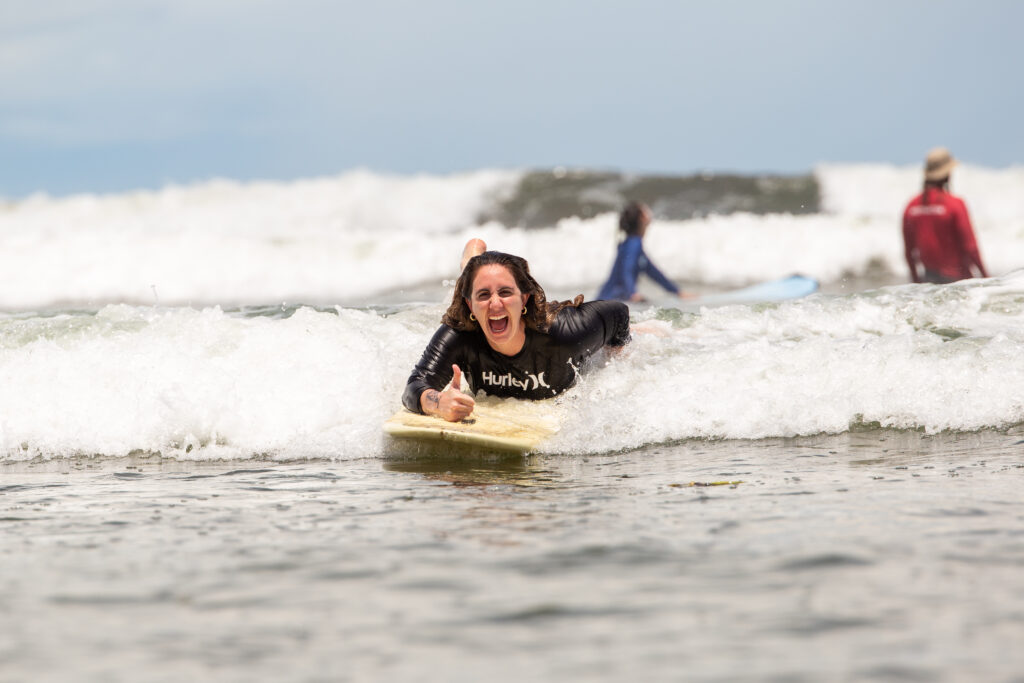
Lastly, we wish our guests to have a fun, inspiring, and educational experience, fully immersing themselves in an eco-friendly tourist destination that supports the local community. Not only do we want our guests to be good surfers, we want to educate them to be able to surf for life, no matter where their adventure takes them. This is the Bodhi Surf and Yoga way.
For First-Time Surfers
You Don't Need Experience. You Don't Need Gear. You Just Need This.
Our free 5-day email course that reveals the 5 myths keeping beginners at "I'm not ready" instead of catching their first wave and finding inner peace-and how to overcome them fast.



How to Teach Yourself How to Surf
Words by Carly Stoenner
Learning to surf is more than standing on a board in the ocean. At its core, surfing is a physical, spiritual, and communal practice…
Is Surfing a Sport? And Why it Matters
Words by Carly Stoenner
To quickly answer this question, yes, surfing is a sport according to the International Olympic Committee (IOC). Surfing officially debuted as an Olympic sport…
The Endless Summer(s) Surf Movies
Words by Bodhi Surf + Yoga
American society is greatly influenced by its media outlets, especially movies. Every now and then there comes along a movie that although is a…