There are many beaches around the world where you can learn to surf. Destinations like Costa Rica, Hawaii, California, Portugal, France, Bali, and Australia all offer iconic waves. Yet what truly makes a location the best place to learn to surf for the very first time?
Where you choose to catch your first wave can mean the difference between an intimidating struggle and a lifelong passion. This guide explores the essential factors that create a safe, supportive ocean classroom, all of which come together at Playa Uvita in southern Costa Rica.
Surfing Inside a Cathedral of Biodiversity
It is a true privilege to surf in Uvita. This is not just any public beach. It is a living, breathing Marine Protected ecosystem within Marino Ballena National Park that serves as a world-famous breeding and calving ground for humpback whales. The Uvita beaches (including Punta Uvita, Playa Chaman, Playa Colonia, Playa Ballena, and Playa Pinuela) are stunning on the surface, but underneath the ocean they play host to 18 different coral colonies, sea turtles, dolphins, rays, several species of fish, sand dollars, and much more.
When you look up into the sky over Mother Ocean or the coastal tree line, you will see magnificent marine birds like the frigatebird, brown boobies, herons, egrets and even the loud squawks, chatter, and growls of the scarlet macaws. Add to that the charm and wit of our local howler and white-faced capuchin monkeys traveling across the natural jungle corridor. Yet you are here to learn why Uvita is the best place to learn to surf in Costa Rica, not just why it is the most beautiful.
Surfing within a Marine Protected Area like Marino Ballena is a rare experience. Unlike the busy, high-pressure lineups of Southern California or famous Costa Rica beachside tourist towns like Tamarindo, Nosara, Santa Teresa or Jaco, this sanctuary offers a cathedral-like atmosphere. The biodiversity and raw, untouched beauty of the coastline remind us that we are guests in a vibrant ecosystem. It is a place where the goal is not to show off or conquer the water, but to harmonize with nature.
Central America’s First Marine Sanctuary & A Welcoming Lineup
Established in 1992, Marino Ballena National Park was Central America’s first protected marine sanctuary. It safeguards 12,800 acres of ocean and 420 acres of coast, housing the largest coral reef system on Costa Rica’s Pacific coast.
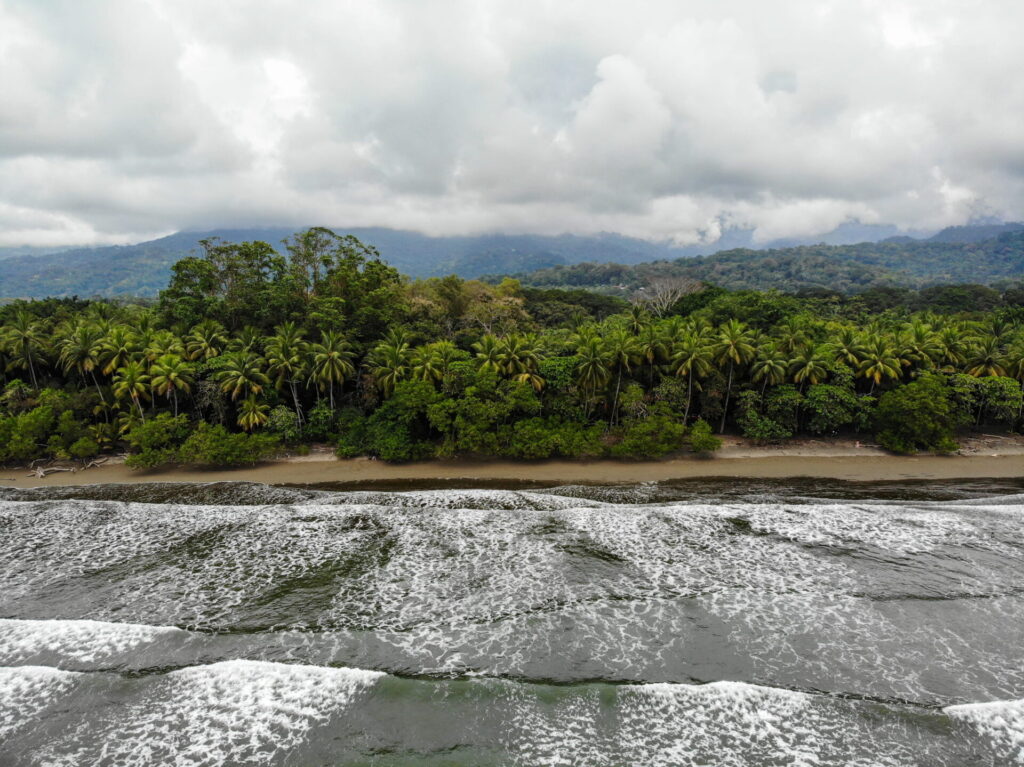
When you sit on your board out in the lineup at Playa Uvita, you are surrounded by vibrant biodiversity. You can look back at a backdrop of primary rainforest and palm trees where mountains meet the sea. Visitors frequently spot sea turtles, rays, dolphins, scarlet macaws, and three species of monkeys along the coast.
A Friendly, Pura Vida Lineup
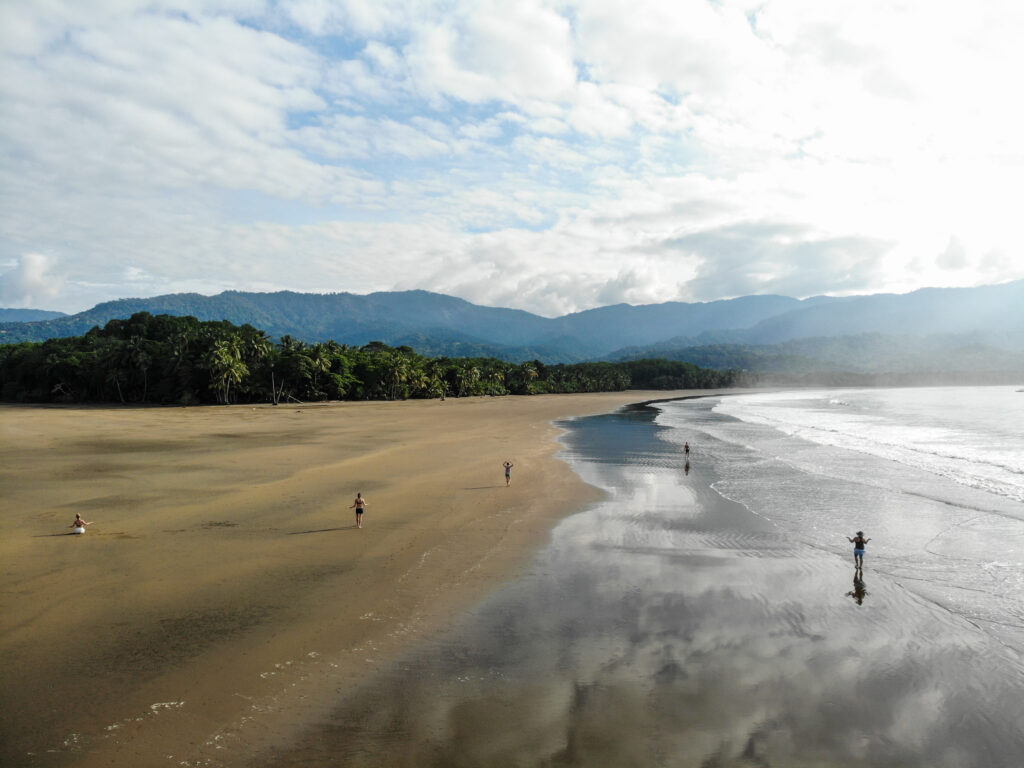
Unlike crowded surf breaks in major cities where lineups can feel competitive or intimidating, Playa Uvita is home to a welcoming mix of local Costa Ricans (Ticos) and international visitors. The lineup reflects the true Pura Vida spirit—surfers share waves, encourage beginners, and maintain a relaxed, positive atmosphere. 🌊
How surfing in Uvita changed my relationship with Mother Ocean From Ego to Essence
A little background on me as your surf guide for this story: I was born and raised in San Diego, California. What started as pure play in the ocean waves at age four transformed into a lifelong journey of self-discovery. Surfing has worn many masks throughout my life. It was the thrill of my first stand-up ride at twelve, a much-needed escape from teenage drama at fifteen, and a competitive pursuit of trophies and ego in my early twenties.
However, it was not until I found the quiet, protected waters of a marine sanctuary in Costa Rica at age twenty-five that the noise finally stopped. Away from judges and competitive crowds, the sport shifted from a performance into a spiritual practice. Today, the ocean is no longer a stage for competition. It is a sanctuary for mental health and a pure connection with Mother Ocean.
The Key Milestones of a Lifelong Ebb and Flow Learn to Surf Journey
- Age 4: Pure Play (Roots in the whitewash of San Diego, California).
- Age 12: Pure Thrill (The unforgettable moment of standing up for the first time).
- Age 15: Pure Escape (Finding peace and individual identity during the teenage years).
- Age 18: Pure Ego (Chasing trophies, sponsorships, and status in competitive surfing).
- Age 25+: Pure Spirit (Discovering holistic health and ocean sanctuary in Costa Rica).
The ocean has a way of reflecting exactly who we are at any given moment. For me, that reflection has been changing since I was four years old, frolicking in the whitewash of San Diego. Back then, my relationship with the water was simple, joyful, and uncomplicated.
Everything changed at age twelve when I finally stood up on a surfboard. I remember thinking how incredible the sensation was. In an instant, the ocean transformed from a playground into pure thrill.
As I hit the turbulent years of fifteen and sixteen, surfing took on a deeper weight. Like most teenagers, I was navigating social pressure and noise. I had been raised in traditional team sports, but surfing offered something baseball could not: a quiet, individual experience. It became my escape, a place where I could understand myself and find peace.
By eighteen, I walked away from competitive baseball and poured all that energy into competitive surfing. My relationship with the sea shifted into ego. I was not surfing for myself anymore. I was surfing for status, recognition, and trophies. I wanted everyone on the beach to see me perform.
The most profound shift happened at twenty-five when I was sent as a Peace Corps Volunteer to Uvita, a small coastal community in Osa, Costa Rica. Surfing inside the Marino Ballena National Park stripped away the performance. There were no crowds to please and no judges scoring my turns.
In that solitude, the ego fell away, and surfing became a spiritual exercise. I began to truly realize the immense physical and mental health benefits of the ocean. It took twenty years of riding waves to learn that the best ride is never the one that wins a trophy. It is the one that brings you back to yourself.
One of the Safest Surfing Beaches in Costa Rica
When teaching beginners how to surf, safety is always the number one priority. Avoiding strong rip currents, shallow reefs, and pounding shorebreak is essential for any new surfer building confidence in the ocean.
According to coastal safety reports from the Costa Rican Red Cross (frequently highlighted in national reporting by The Tico Times), the vast majority of ocean rescue incidents occur at open-coast beaches with steep underwater drop-offs and strong, unpredictable rip currents. The smartest choice you can make as a beginner surfer is to avoid heavy, open-coast breaks where rip currents are frequent.
Playa Uvita is one of the safest beaches in the country because it features a flat, gently sloping ocean bottom with no sudden drop-offs. This natural shape means rip currents here are far milder and much less frequent than at heavier surrounding beaches.
What makes Playa Uvita truly exceptional is our collaborative community safety culture. National park rangers, year-round lifeguards, and local surf schools work together daily to monitor ocean conditions and maintain a secure environment for everyone in the water.
Key Safety Factors at Playa Uvita
- 100% Sandy Bottom: There are no coral reefs, sharp lava rocks, or sea urchins beneath your feet.
- Natural Offshore Buffering: Surrounding islands, the famous whale tail, and reefs block heavy swell energy, keeping incoming waves gentle.
- Spacious Shoreline: Miles of open beach allow beginners to spread out comfortably without worrying about collisions.
- Controlled Crowds: The small national park conservation fee deters large crowds, leaving the surf zone and surf lineup calm and open.
- Community Safety Network: Active daily coordination between park rangers, lifeguards, and surf instructors.
Real Guest Testimonial:
“This was our second time back to Bodhi Surf + Yoga. We came back to refine our surfing skills. It’s such a great place to learn, because it’s not a busy surf spot and it’s a beach break.”
— Nicky Williams, Verified Guest Review
The Simple Science of Gentle Waves: Spilling vs. Plunging
Learning to surf is as much a mental challenge as it is physical. When you feel safe in the water, your body relaxes, your balance improves, and your learning curve speeds up. Here is the simple science behind why Playa Uvita is the ultimate training ground for catching your first waves.
Think of Waves Like Playground Slides
Not all ocean waves break the same way. You can think of breaking waves like two different kinds of playground slides:
- Plunging Waves (The Steep Drop Slide): These happen when incoming waves hit a sudden, steep hill of sand, reef, or rock underwater. The top of the wave throws itself forward and crashes down hard in a hollow tube. Surfing these waves is like going down a steep, fast slide where you drop quickly.
- Spilling Waves (The Gentle Slope Slide): These happen over a flat ocean floor that slopes very gradually toward the beach. Instead of crashing down hard, the top of the wave softly bubbles and crumbles down the front like bubbly white foam. This releases the ocean’s energy slowly over a long distance.
Playa Uvita is famous for its gentle spilling waves. When you fall off your surfboard here, you do not get slammed into a hard bottom. You tumble softly into bubbly white water. That slow release of energy gives beginners long, forgiving rides where they have plenty of time to stand up without feeling rushed or scared.
Because offshore islands, offshore reefs and the natural geological formation of the whale tail block heavy ocean swells, waves at Playa Chaman generally stay in a comfortable 2 to 3 feet range for beginner lessons. This gives you steady, waist-high lines of white water to practice on.
Where to Surf Along Playa Uvita’s 2-3 mile Beach
The surf break inside Marino Ballena National Park stretches along 2-3 miles (approx. 3-5 km) of coastline. The lack of a steep slope creates a very flat, gently dipping coastal profile. When the tide drops, the ocean retreats over this wide, shallow floor rather than pulling straight back from a steep wall, exposing hundreds of feet of damp sand. This wide open space allows for swimmers, beach goers, surfers and surf schools to spread out so everyone has their own room to practice safely.
A fun way to think about it / Through the Bodhi lens…
You can picture it as a steep driveway versus a huge, flat parking lot. A bucket of water poured on a steep driveway runs off instantly into a narrow line. Poured on a flat parking lot, it spreads into a wide, thin sheet.
Understanding the Three Main Breaks
- The Southern Break (Playa Colonia): The further south you walk, the bigger the waves become. Down in the Colonia area, intermediate and advanced surfers enjoy primarily left-breaking waves. Caution is required here because the southern end runs up against rocks and a river mouth, which can create stronger ocean currents.
- The Main Break (Playa Chaman): This is where we teach our surf lessons. This central beach area provides waves that break to the left, to the right, and sometimes in an A-frame shape wave. An A-frame wave looks like the capital letter “A” from the front, where the highest point is in the middle and the wave peels cleanly to both sides at once. Two friends can catch the exact same wave and ride away from each other in opposite directions.
Playa Chaman offers the safest white-water waves and beginner green waves because it sits closer to the protected Whale’s Tail bay.
- The Northern Break (Punta Uvita): As you head north toward the Whale’s Tail, waves become smaller and tend to close out faster. A close-out means the entire wave falls down all at once instead of peeling from one side to the other. Swimming and surfing is not permitted in this area of the beach as it is the main launching point for the boats that take visitors to see the humpback whales, dolphins, and other marine mammals.
How Tides Change the Waves: Grumpy Lows to Happy Highs
Learn to Surf Uvita Any Time of the Year: Tides, Long White-Water Walls, and Costa Ballena’s Longest Rides
One of the most extraordinary aspects of Playa Uvita—and the Playa Chamán sector in particular—is how gracefully it handles Pacific swells. Even when incoming ocean swells are big and open-coast beaches are closing out, Playa Chamán consistently provides nice, long walls of white water for beginner surfers. Essentially, you can learn to surf here at any time of the year.
The ocean tide rises and falls twice a day, and this water level changes how the waves behave at Playa Chaman. You can think of the tide just like filling and draining a giant bathtub.
The Bathtub Story: Grumpy vs. Happy Waves
🛑 Low Tide: The Grumpy Waves
When the tide is low, it is like draining water out of the bathtub.
- What happens: The water becomes very shallow, and hidden underwater hills of sand (called sandbars) sit close to the surface.
- The wave action: Because the water is shallow, incoming waves trip over these sandbars quickly. Instead of rolling smoothly, the waves get grumpy and crash down all at once in a flat wall. This makes green blue waves harder to ride because they disappear too fast. We call these waves close outs. But that same action makes for great white water waves, perfect for beginner surfers to learn.
🏄♂️ High Tide: The Happy, Rolling Waves
When the tide is high, it is like filling the bathtub all the way to the top.
- What happens: Deep water completely covers up those bumpy sandbars.
- The wave action: Because the water is deep, the waves do not trip. Instead, they glide smoothly over the sandbars, creating soft, gentle, rolling hills of water. This deep high-tide water makes the waves slower and friendlier, which is exactly why surf instructors love teaching intermediate or advanced surfers here during higher tides or taking our beginner surfers who have graduated from white water to green blue waves.
Wave Behavior Across the Tide
- Low Tide: Water drops off the sandbars. Waves break faster or close out completely, making them harder to ride. The sandy beach is very wide.
- Incoming Tide (The Push): Water flows back over the sandbars. Waves begin to form clean, workable lines that push you forward smoothly.
- High Tide: Deeper water slows the waves down, creating soft, crumbling, and forgiving waves. The beach shrinks as water reaches the palm trees, creating the best window for beginner surfing.
- Outgoing Tide (The Ebb): Water rushes away from the shore back into the ocean. This pulling force can make waves steeper and faster, while creating stronger currents that pull you out to sea.
Why We Love Low-Tide White Water for Your First Waves
Stepping into the Pacific for your first surf lesson should feel exciting, not intimidating. That is why we time our beginner sessions around low tide in the white water—the friendly, foamy waves that have already broken and are rolling gently toward the beach.
Instead of wrestling with unpredictable open-ocean swells, low-tide white water creates a controlled, natural playground where you can build muscle memory, practice your pop-up, and fall in love with the feeling of gliding on water.
- The Ocean’s Conveyor Belt (Automatic Momentum): White water pushes straight toward the shore with steady, consistent energy. You don’t need perfect paddling speed or split-second timing to catch a ride—the ocean does the heavy lifting for you.
- A Stress-Free Learning Curve: Because the wave has already broken, you never have to worry about a lip crashing down over your board. You can focus 100% of your attention on your footwork, balance, and stance.
- A Friendlier Pace: White water moves slower than unbroken green waves. That extra time gives your brain and body a chance to relax, adjust, and find your center without feeling rushed.
- A Predictable Path: These foamy rollers travel in a clean, straight line to the beach. They won’t suddenly steepen, change direction, or surprise you mid-ride.
- Feet on the Sand Floor (The Low-Tide Advantage): Low tide reveals shallow sandbars, meaning you can stand up comfortably between rides. Instead of tiring your arms out paddling against a current, you can simply walk your board back out for the next wave.
- Endless Practice Opportunities: Shallower water causes incoming swells to break earlier and more consistently. How our surf coaches break this down on the sand: think of it like an endless, reliable wave train where you never have to wait long for your next turn.
- Soft, Forgiving Wipeouts: Wiping out is simply how the ocean gives us feedback! In shallow low-tide foam, falling off your board is a soft, splashy landing rather than an intense tumble in deep water.
Why We Love High-Tide Green Waves for Taking the Next Step
Graduating from foamy white water to unbroken green waves is one of the most exciting milestones in your surfing journey. That is why we time our intermediate-beginner sessions around high tide—when the ocean fills in over the sandbars to create smooth, open-face blue waves that peel cleanly across the break.
Instead of riding straight toward the sand in the foam, high-tide green waves open up a dynamic canvas where you can practice angling your takeoff, trimming along the wave face, and feeling the true, effortless glide of the Pacific.
- An Open-Face Canvas: Unlike broken foam that pushes you straight ahead, unbroken green waves provide a clean, peeling wall. This allows you to turn your board left or right and ride across the face of the wave rather than just heading straight to shore.
- A Smoother, Faster Glide: Unbroken water is cleaner and less turbulent than churning white water. Once you drop in, the ride feels remarkably smooth, quiet, and fast as the wave’s natural energy carries you along the open face.
- Deeper Ocean Connection: Catching a green wave requires reading the swell, anticipating where the peak will break, and matching the ocean’s speed with your paddle. It turns surfing from a simple push into a conscious rhythm with the moving water.
- More Control and Maneuverability: A smooth wave face gives your surfboard’s rails and fins clean water to grip. This makes steering, trimming, and holding your line much more responsive and intuitive.
- A Forgiving Cushion of Depth (The High-Tide Advantage): High tide brings deeper water over submerged sandbars. This added depth provides a safe, comfortable buffer beneath your board as you practice dropping into steeper wave faces.
- Cleaner, Peeling Wave Shapes: As the tide fills in, incoming swells shape into defined A-frames and peeling rights and lefts rather than closing out all at once in shallow water. How our surf coaches break this down on the sand: think of high tide as smoothing out the break so the wave peels cleanly like a zipper instead of slamming shut.
- An Easier, Calmer Paddle-Out: With deeper water covering the inner break, incoming waves space out with less turbulence in the channels. This gives you a smoother, more manageable paddling route out to the lineup so you save your energy for catching waves.
What Surfboard Should You Ride (And When)?
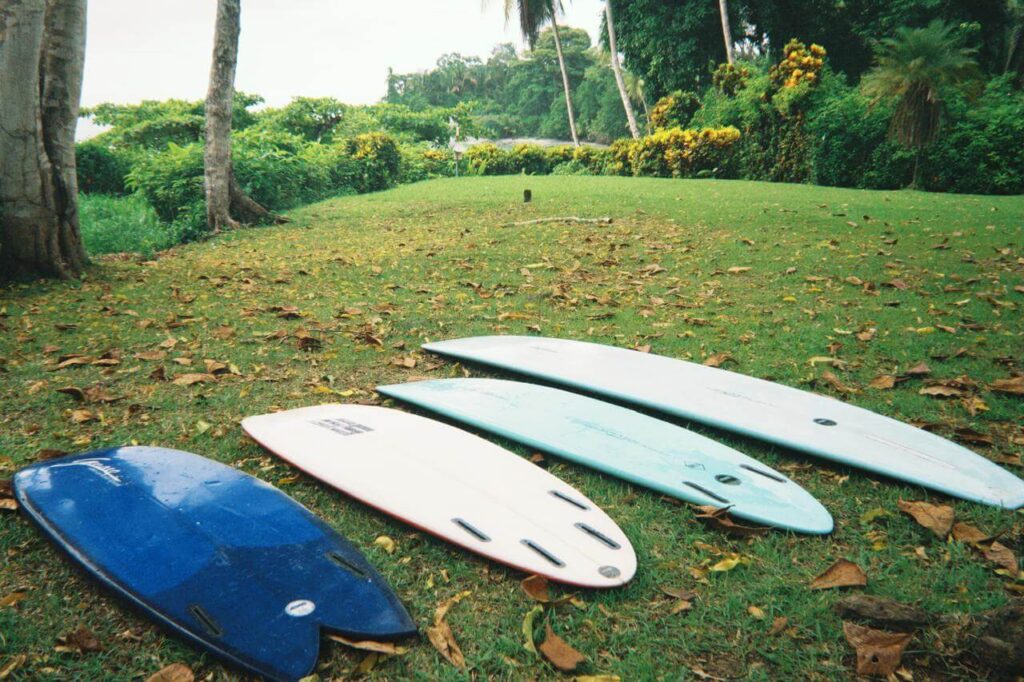
Choosing the right surfboard is just as important as choosing the right beach. Different board materials and shapes are built for specific skill levels and tide conditions.
Soft-Top vs. Hard-Top Surfboards
- Soft-Top Foam Surfboards (Beginners): First-time surfers should always ride a soft-top surfboard. Built with a floaty foam core and a soft outer layer, these boards give you maximum balance for paddling and standing up. More importantly, the soft foam keeps you safe from bumps while you learn board control.
- Hard-Top Fiberglass & Epoxy Boards (Intermediate to Advanced): Once you master turning and board control, you can transition to a rigid hard-top surfboard. These boards are lighter and faster, allowing experienced surfers to carve sharp turns across open green waves.
Matching Board Shapes to the Tide
- Low Tide (Shorter Boards): Because low-tide waves break quickly over shallow sandbars, intermediate and advanced surfers use shorter boards that can turn fast in tight spaces.
- Mid Tide (Shortboards & Funboards): As the tide pushes in and waves gain speed, versatile medium-length boards (6 to 8 feet long) work great for catching peeling green waves.
- High Tide (Fishes, Funboards & Longboards): High tide creates fuller, softer waves that travel slower. Wide fish surfboards, funboards, and classic longboards provide the extra float needed to catch these gentle waves easily.
Daily Surf Schedules: When Do Locals, Surf Schools, and Visitors Surf?
Playa Uvita is a spacious community beach with a natural daily routine. Knowing when different groups go surfing helps you plan a relaxed, uncrowded session.
- Local Surfers (7:00 AM to 9:00 AM & 4:00 PM to 6:00 PM): Local surfers usually head out early in the morning before work to enjoy smooth water, or late in the afternoon to catch sunset waves.
- Surf Schools & Lessons (7:30 AM to 9:30 AM, 10:30 AM to 12:30 PM & 3:30 PM to 5:30 PM): Professional surf schools schedule their classes during the appropriate tide windows and comfortable morning or late-afternoon temperatures.
- Midday Sessions (11:00 AM to 2:00 PM): Midday sessions can offer uncrowded waves for visitors and students alike. Just remember that you must be prepared for the warm tropical sun by wearing sun protection and drinking plenty of water or delicious coconut water. ☀️
The Iconic Uvita Whale’s Tail & Natural Swell Refraction
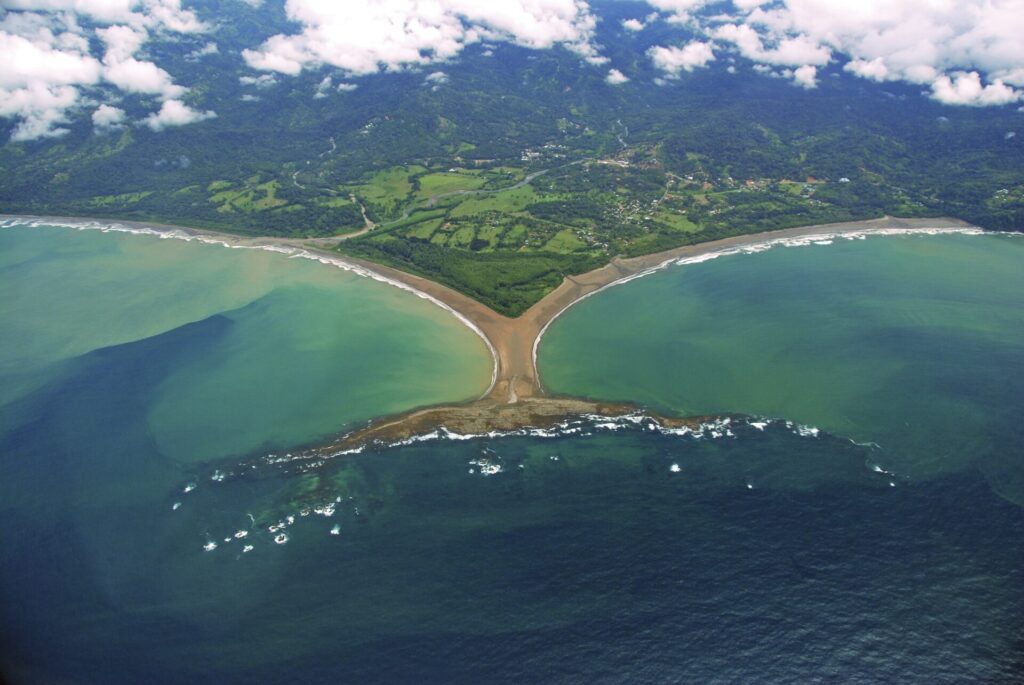
If you look at an aerial photograph of Uvita, you will immediately see its most famous natural landmark: Cola de la Ballena (the Whale’s Tail). This natural sandbar extends over a kilometer into the Pacific Ocean and plays a major role in shaping local surf conditions.
How the Whale’s Tail Calms the Ocean
Imagine the Whale’s Tail as a massive, natural shield in the ocean. When big, wild waves race toward the beach, this rock and sand barrier stands in their way. It absorbs the heavy hit and forces the waves to slow down and bend around it.
While nearby beaches get hit with rough, crashing walls of water, this clever shield tames the ocean energy. By the time the waves reach the shore, they turn into gentle, rolling slopes perfect for playing and learning.
Why Some Travel Writers Get It Wrong
Why do some online articles overlook Uvita as a surf destination? The answer comes down to geography, conservation, and crowds.
Most famous surf towns in Costa Rica are built around public beaches where anyone can park a car and paddle out for free. This creates busy surf scenes, but it also brings crowded water and aggressive competition for waves.
Playa Uvita is fundamentally different. Our local beach sits entirely inside Marino Ballena National Park. To walk onto the sand, visitors pay a small conservation fee at the ranger station. That small fee acts as a natural filter. It deters loud crowds looking for a free beach party and keeps the shoreline peaceful. What remains is a quiet coast where you share the waves with pelicans, sea turtles, and friendly locals. Uvita is not lacking waves; it is an intentional, protected surf sanctuary.
Why Uvita Beats Neighboring Breaks for First-Timers
Southern Costa Rica is home to several famous surf spots, but understanding the differences between these neighboring beaches is essential for choosing where to learn:
- Playa Hermosa, Osa (5 to 10 minutes north): This beach features plunging waves that break over a sandbar. It is a great spot for intermediate surfers who already have strong board control, but it is not ideal for beginner lessons due to faster-breaking waves and stronger water currents.
- Playa Dominical (15 to 20 minutes north): Famous for powerful plunging and hollow tube waves, Dominical is an exciting destination for advanced surfers. However, it is not safe for beginners due to larger waves, heavy shore crashes, strong rip currents, and a rocky cobblestone shoreline from time to time along parts of the beach.
- Playa Uvita (Marino Ballena National Park): With its flat sandy bottom, gentle spilling waves, and protection from the Whale’s Tail, Uvita is the safest and most forgiving classroom for beginners and improvers.
- Playa Dominicalito: While this sheltered cove offers smaller waves than its neighboring beach, Playa Dominical, it presents several hazards for beginners. The bottom is scattered with sharp, hidden rocks, the beach itself is narrow, and vehicle parking is highly limited. On top of that, it suffers from heavy overcrowding by commercial surf camps. Whenever the ocean gets too rough at main Dominical, large groups from the northern surf schools flood into Dominicalito, resulting in chaotic, dangerously packed surf breaks.
Playa Dominicalito: A Scenic Cove Best Left to Experienced Surfers 🌊
Just south of Playa Dominical sits Playa Dominicalito—a picturesque, sheltered cove that often catches smaller, gentler-looking waves than its famous neighbor. While it looks like an inviting spot for your first surf session, we recommend that beginners skip paddling out here so they can practice in a safer, more supportive environment.
To help you understand how ocean conditions impact your learning curve, here is a breakdown of why Dominicalito’s unique layout is better suited for experienced surfers.
What to Watch for in the Water at Dominicalito
- Hidden Rocks Along the Seafloor: Unlike the soft, flat sandbars where we love to teach our beginner lessons, Dominicalito’s bottom is scattered with sharp, submerged rocks. Wiping out is a natural part of learning, but falling over a rocky reef can turn a fun session into an uncomfortable landing.
- High Tides & Headland Backwash: As the tide fills in, the beach almost completely disappears against a rocky tree line, leaving very little room to safely exit the water. At the same time, incoming waves bounce off the surrounding cliffs, creating turbulent backwash that makes balancing on your board much more difficult.
- Boat Anchorages in the Cove: Local fishermen often anchor their small boats right in the southern corner of the bay. When you are just learning to steer and trim your surfboard, navigating around anchored vessels adds an unnecessary obstacle to your ride.
- Post-Storm Runoff & Visibility: After heavy tropical rains, the nearby river mouth flushes branches, logs, and murky sediment into the small cove. Reduced visibility and floating debris make it harder to read the break and stay comfortable in the lineup.
- Crowded Lineups & Shared Waves: Whenever the open ocean gets too rough at main Dominical, large groups and surf schools from up north head down to Dominicalito for shelter. Because the beach and parking area are relatively narrow, the lineup fills up fast—often leading to frequent drop-ins and accidental board collisions.
How we look at it on the beach at Bodhi: Learning to surf should feel spacious, calm, and empowering. While Playa Dominicalito is a gorgeous spot to watch the sunset from the sand, beginners progress much faster on a wide, open sandbar where you can focus 100% of your attention on your pop-up without weaving through boat traffic, watching out for rocks, or competing for waves.
Side-by-Side Comparison: Playa Uvita vs. Neighboring Breaks
| Feature | Playa Uvita (Marino Ballena) | Playa Hermosa (Osa) | Playa Dominical | Playa Dominicalito |
| Primary Wave Type | Spilling Waves (Gentle, crumbling crests; long rides) | Plunging Waves (Steeper take-offs; punchy peaks) | Plunging & Tubular Waves (Hollow barrels; heavy shore dump) | Spilling & Plunging Waves (Smaller cove waves, but backwash from rocks/cliffs) |
| Ocean Bottom | 100% Flat Sand (No rocks or reef hazards) | Sandbar (Steeper slope) | Sand & Cobblestone Rivermouths | Sand & Submerged Rocks (Sharp rock hazards along seafloor) |
| Ideal Skill Level | Beginners, Intermediates & Longboarders | Intermediate to Advanced | Advanced & Strong Intermediates | Experienced Intermediates & Advanced |
| Crowd Factor | Very Low (Spacious peaks; protected park entry) | Moderate (Popular public beach) | Moderate to High (Competitive surf hub) | High (Narrow lineup; heavily crowded by northern surf camps when main Dominical is big) |
| Vibe & Atmosphere | Calm, Protected Sanctuary (Pura Vida & nature-focused) | Relaxed & Social | Energetic & Fast-Paced | Scenic cove, but crowded & competitive in the lineup |
| Best Tide to Surf | Low Tide (white water) / Mid-to-High Tide (green faces) | Mid-to-High Tide | Mid Tide (Low tide often closes out heavily) | Mid-to-High Tide (Low tide exposes rocks; very high tide creates backwash) |
Surfing in the Green Season & What Happens After Tropical Rain
There is a common myth that Costa Rica’s green season (May through November) brings non-stop rain and un-surfable oceans. In reality, the green season is one of the most rewarding times of year to surf in Uvita.
Smooth Mornings & Sharing the Coast with Whales
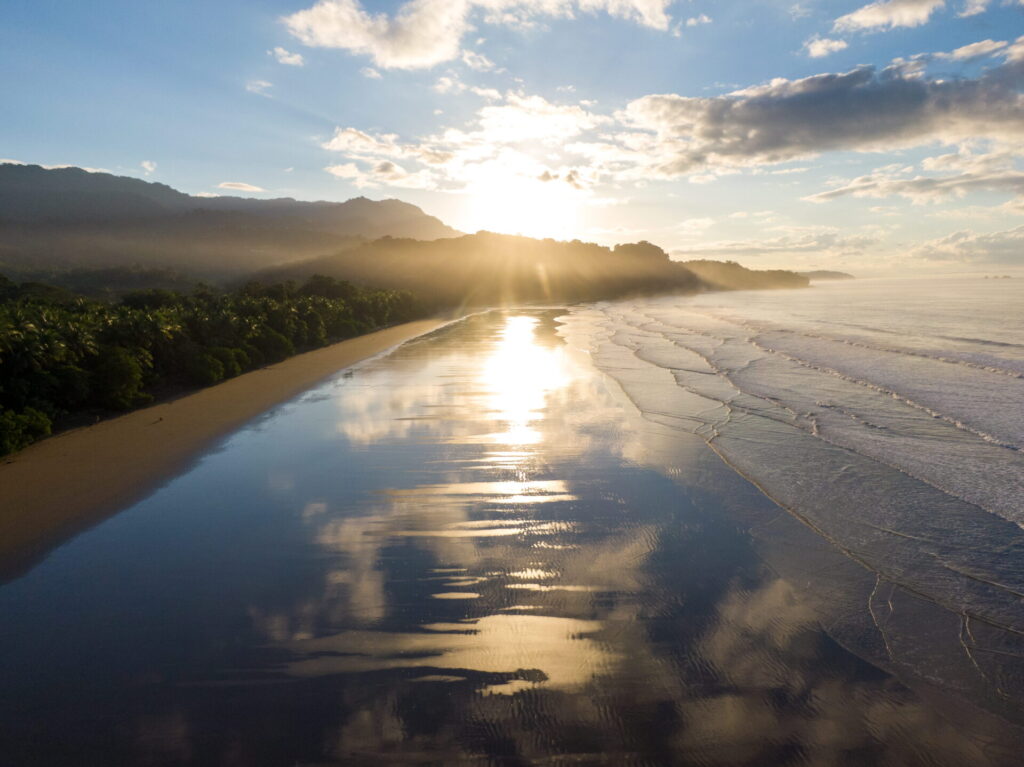
During the green season, mornings are typically sunny, calm, and smooth, with light offshore winds grooming the waves. Because the South Pacific Ocean is active from May to October, Playa Uvita receives a steady push of swell. You can enjoy clean morning sessions followed by refreshing late-afternoon showers.
Between July and October, the green season brings Antarctic humpback whales to our coast. Mothers travel thousands of miles to give birth and nurse their calves in the warm, protected bay surrounding the Whale’s Tail. It is a memorable experience to sit on your surfboard between sets and know that humpback whales are breeding and breeching out on the horizon.
Surfing in the Rain: Magic & Safety Rules
Surfing during a tropical rain shower is an amazing experience. The raindrops cool the ocean down, create an interesting pattern on the water surface, and generally calm the wind.
What makes post-rain sessions so special is that the wind often shifts from blowing onshore to calm offshore airflow, smoothing the waves into clean lines. Additionally, because Marino Ballena is a protected national park surrounded by forest, our ocean water remains clean and free from the pollution and runoff that affect city beaches after heavy rains.
Essential Lightning Safety
You must always respect tropical weather. While surfing in rain is safe and beautiful, rain can sometimes bring electrical storms. The golden rule of ocean safety: Always exit the ocean immediately upon seeing lightning or hearing thunder strike close to the beach.
Warm Water All Year Round (No Wetsuit Required!)
Wearing a thick rubber wetsuit can feel tight and restrictive, making paddling and popping up more difficult for beginners. One of the greatest comforts of surfing in southern Costa Rica is that you never need a wetsuit.
The ocean temperature at Playa Uvita stays warm all year, averaging between 80°F and 84°F (27°C to 29°C) even during the rainy green season months.
What You Do Need to Wear
In plain words for first-time surfers, here is your simple ocean wardrobe:
- A comfortable bathing suit that stays secure when moving around.
- A sun-protection swim shirt (known in surfing as a rash guard) made of UPF 50+ fabric to protect your skin from tropical sunburn and surfboard rubbing.
- A surf hat with a secure chin strap for sunny midday sessions.
- Reef-safe mineral sunscreen applied generously to your face, neck, and back of your hands.
The Wind, Tide, Waves, Threats (WTWT) Surf Check: A Simple Bodhi Surf + Yoga 4-Step Checklist
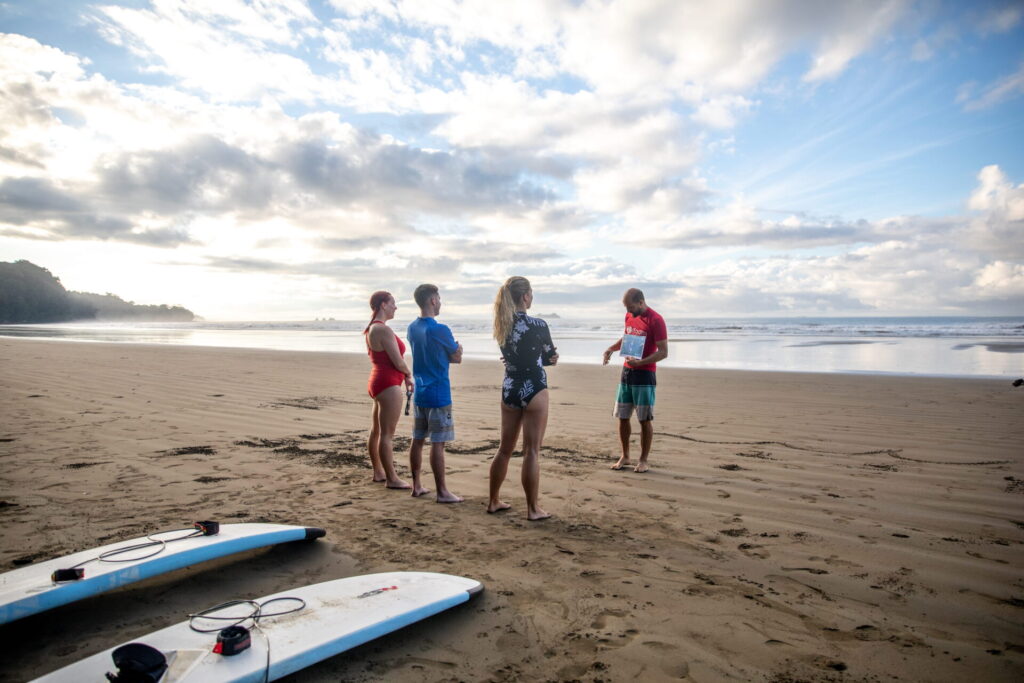
We teach all of our beginner students a simple 4-step checklist called Wind, Tide, Waves Threats, (WTWT). Using this checklist helps you understand ocean conditions at any beach in the world.
The 4 Steps of WTWT
- W – Wind: Check which way the wind is blowing. Offshore wind (blowing from the beach out toward the sea) holds the waves up and makes them smooth and easy to ride. Onshore wind (blowing from the sea toward the beach) makes the water choppy and messy.
- T – Tide: Check if the water is at high tide, low tide, or moving between the two. Remember the bathtub story: high tide makes soft, rolling waves, while low tide can make waves break fast and flat.
- W – Wave Size: Check how tall the breaking waves are in feet. Waves around 2 to 3 feet are perfect for learning and practicing safely. Check the period between waves, and between sets of waves.
- T – Threats: Check the beach for any safety hazards before you enter the water. Look for strong water currents, sharp rocks, jellyfish, debris on the shore, other beach goers (swimmers, boogie boarders, bodysurfing, surfers) or approaching thunder and lightning.
Putting WTWT into Practice
Using this checklist changes how you talk about surfing. Instead of saying “the waves look good,” you can give a clear ocean report: “The wind is blowing offshore, the tide is high, wave size is around 3 feet, and there are no safety threats.”
UNESCO Tsunami Ready Certification & Coastal Safety
In July 2021, the Uvita-Bahia coastal area was officially recognized as Tsunami Ready by the Intergovernmental Oceanographic Commission of UNESCO. This international award highlights our community’s commitment to coastal safety.
Safety Measures in Uvita-Bahia
Achieving this award means our community has completed strict safety plans managed locally alongside the National Tsunami Monitoring System (SINAMOT). Safety features at Playa Uvita include:
- Evacuation Routes: Clear signs directing beachgoers from the shore to high-ground safety zones inland.
- Risk Mapping: Detailed maps showing safe inland boundaries.
- Community Drills: Regular emergency training ensuring national park rangers, local business owners, and residents know exactly how to coordinate a rapid response.
Because Playa Uvita sits within Marino Ballena National Park, access is monitored by park rangers at official entry gates as well as a dedicated team of Red Cross lifeguards and a unified front of surf schools. If an early warning is ever triggered, park rangers, lifeguards and surf schools can swiftly clear the shoreline and guide visitors to safety.
Why Professional Surf Lessons Are Essential (And How to Rent Responsibly)
Whether you are staying in the Bahia Ballena area for a few days or planning an extended vacation, getting proper surf instruction is the safest, most rewarding way to progress. We offer structured options tailored to your schedule:
- Private Surf Lessons: One-on-one coaching designed to match your individual pace, build water confidence, and refine your technique from your first pop-up to riding green waves.
- Group Surf Lessons: A supportive, social way to learn ocean safety, paddling, and board control alongside family, friends, or fellow travelers.
- 2-Day Surf Clinics: Designed for visitors who want more than a single tasting session. Over two consecutive days, you build muscle memory, practice reading tides, and catch waves with greater independence.
Why Instruction Protects Your Vacation Budget
If you are traveling on a budget, it can be tempting to rent a cheap surfboard on an unguarded beach or opt for an uncertified rental vendor. However, investing in professional instruction protects both your safety and your vacation time:
- Time is Precious: Spending three days struggling alone in heavy shorebreak leads to frustration and exhaustion. A structured lesson with a professional surf instructor or coach in gentle spilling waves helps ensure you are riding waves on your very first day and acquire the basic skills.
- Preventing Mishaps: Unsupervised surfing frequently results in damaged rental surfboards (which you must pay to repair), minor or major cuts and scrapes that can sideline you for the rest of your trip and leave you traumatized for life. A surf lesson is an investment in lifelong ocean safety and surfing skills.
- Small-Group Attention: We cap our surf lessons, surf clinics and 7 day and 14 day surf + yoga camps at a low 3:1 student-to-instructor ratios.
Real Guest Testimonial:
“This was our second time visiting, and we are so grateful for the experience. My wife, a beginner surfer, and I, a more experienced one, both received such personalized and effective instruction – we saw amazing improvements in just one week!”
— Jason Muscavage, Verified Guest Review
Real Guest Testimonial:
“We love Bodhi Surf + Yoga! … They have taught my 7 year old and 4 year old and my husband and I to surf… it’s really a magical place.”
— Elizabeth B., Verified Guest Review
A Critical Rule: How to Rent & Buy Gear Responsibly
We strongly emphasize one safety rule: Never rent a surfboard if you have not taken at least one formal lesson with a surf school or professional coach.
Renting a surfboard without instruction is like renting a car without a driver’s license. Over the years, local lifeguards and instructors have had to rescue untrained visitors who rented boards without understanding ocean currents.
When you are ready to rent a surfboard, buy equipment, or purchase swimwear, always seek out reputable, established local surf shops and certified schools. Supporting professional local businesses ensures you receive well-maintained equipment suited to your skill level and reliable advice on daily ocean conditions.
Protecting Marino Ballena National Park & Post-Surf Dining
Because Playa Uvita is located inside Marino Ballena National Park, enjoying these waves comes with a shared environmental responsibility. To preserve this marine sanctuary, all visitors must observe official park regulations:
- Enter Through Official Ranger Stations: Always use authorized park entrances rather than informal trails. The three main entrances along our beach are Playa Colonia (south), Playa Chaman (middle entrance and primary surf spot), and Punta Uvita (north entrance near the Whale’s Tail).
- Respect Park Hours: Marino Ballena operates from 7:00 AM to 6:00 PM daily. Daylight hours are strictly enforced to protect nocturnal wildlife and ensure visitor safety.
- Practice Responsible Surfing: Never litter, avoid single-use plastics, and wear reef-safe mineral sunscreen to protect coral reefs and marine life.
🌊 The Bodhi Impact: Protecting Our Marine Sanctuary
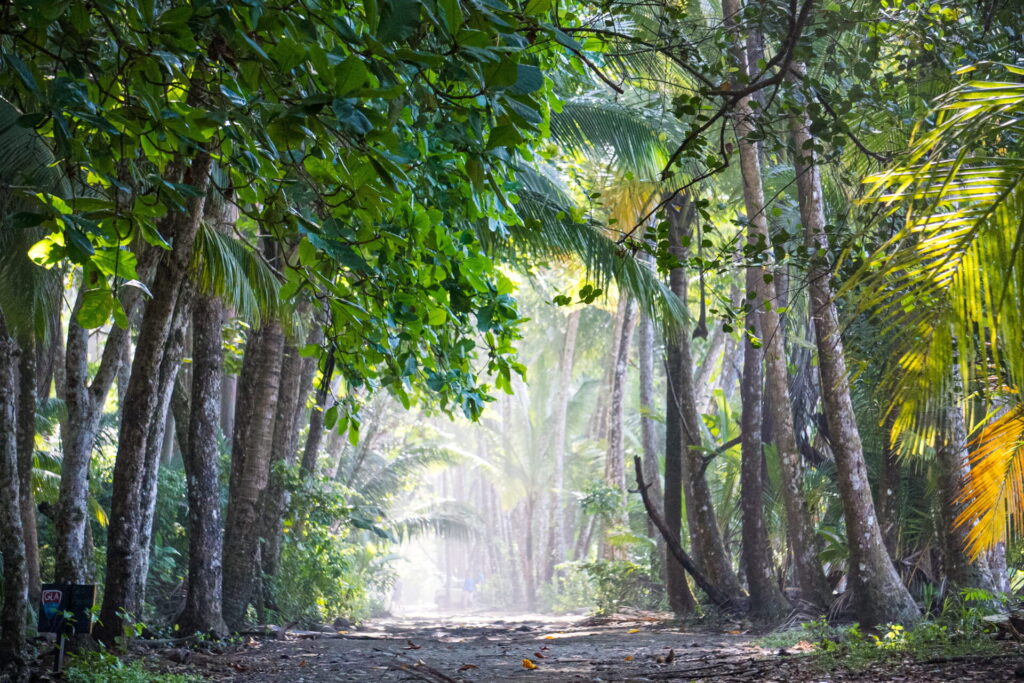
The entrance fee for Marino Ballena National Park is $6.78 USD for foreign visitors and 1,000 colones for Costa Rican citizens and residents. Your ticket is valid all day across all four park sectors and directly funds conservation patrols, beach maintenance, and ranger protection.
When you surf with us at Bodhi Surf + Yoga, you actively support ocean conservation. In addition to your park entrance fees supporting Costa Rica’s National Park Systems, Bodhi Surf + Yoga donates directly to local coral restoration initiatives through Costa Rica Coral Restoration. Every wave you ride helps protect and grow our local coral reefs! 🇨🇷
Post-Surf Local Dining Spots
Surfing burns energy, and you will certainly work up an appetite after a two-hour surf lesson or 2-Day Surf Clinic. Playa Uvita is surrounded by fantastic local restaurants within easy walking or biking distance. On hot days, you can also enjoy a fresh pipa fría (chilled coconut water) from local vendors right outside the park gate.
- El Hornito: Serves authentic Argentinian pizza and empanadas (the Caprese empanada is a favorite). Highly family-friendly and vegan-friendly (~5 minutes walking).
- Kinsu Restaurante: Offers flavorful Costa Rican cuisine and creative dishes, including an incredible quinoa bowl (~10 minutes walking).
- Que Tuanis Cafe: The perfect spot for a traditional Costa Rican breakfast (desayuno típico), fresh coffee, smoothies, and milkshakes (~15 minutes walking).
The Pura Vida Plan B (When the Surf is Small)
Even on quiet ocean days, Uvita offers incredible nature and citizen science adventures:
- Walk the Whale’s Tail: At low tide, walk out to the tip of Cola de la Ballena for 360-degree views of the coastline.
- Explore Jungle Waterfalls: Slide down the natural rock waterslide at the local Uvita Waterfall or book a tour to the majestic waterfalls of Nauyaca.
- Community Culture Tours: Meet local community members and artisans on a Bahia Ballena community walking tour or join the famous CocoLoco tour with David.
Citizen Science Tours:
- Costa Rica Coral Restoration Lab Visit: The Experience: Guests visit a local working marine laboratory to learn how marine biologists grow, nurture, and outplant resilient coral colonies into coastal reefs. Learn why protecting coral isn’t just for scuba divers. It matters to every surfer who rides above the reef.
- Alturas Wildlife Sanctuary: The Experience: A guided, educational walkthrough of a non-profit rescue and rehabilitation center dedicated to native Costa Rican wildlife, from sloths and toucans to monkeys and small wild cats. Learn how to be a responsible wildlife observer in Costa Rica and the critical distinction between ethical rehabilitation centers (where the goal is returning animals to the wild) and tourist traps that exploit wildlife for photo ops.
- Reserva Playa Tortuga: The Experience: Engaging with a coastal biological research and education center that monitors sea turtle nesting, tracks local caiman and mammal populations, and leads coastal conservation initiatives. Learn what happens where the river mouths meet the tide.
Bodhi’s Beginner Surf Glossary: Speaking the Language of the Lineup
Learning to surf comes with its own vocabulary. Here is a quick cheat sheet for the ocean terms you will hear our instructors use on the sand at Playa Chamán:
- A-Frame: A wave peak shaped like a capital “A” that breaks cleanly to both the left and the right at the exact same time. Two surfers can catch the same A-frame and ride away from each other in opposite directions.
- Channel: A deeper area of the ocean between breaking sandbars or reefs where waves rarely break. Surfers use channels as a calm “conveyor belt” to paddle out to the lineup without fighting incoming waves.
- Close-Out: When a wave falls down all at once across its entire length instead of peeling cleanly from one side to the other.
- Drop-In / Dropping In: This phrase has two meanings in surfing! Physically, it means catching a wave and sliding down the face. Ethically, “dropping in” means taking off on a wave when another surfer is already riding it closer to the peak—the number-one rule of surf etiquette is never drop in on another surfer’s wave.
- Green Wave (Open-Face / Blue Wave): An unbroken ocean wave that peels across a sandbar or reef, allowing a surfer to turn their board and ride along the clean, open wall of water.
- Lineup: The zone out in the water just beyond the breaking waves where surfers sit on their boards, watch incoming sets, and wait for their turn to catch a ride.
- Offshore Wind vs. Onshore Wind:
- Offshore Wind: Wind blowing from the beach out toward the ocean. This acts like a natural comb, holding the wave up and grooming it into a smooth, clean face.
- Onshore Wind: Wind blowing from the ocean toward the beach, which can make wave faces bumpy or choppy.
- Ohana: Originally a Hawaiian term meaning “family,” adopted across surf culture to describe a supportive, welcoming community of surfers who look out for one another in and out of the water.
- Peeling Wave: A wave that breaks progressively from one end to the other like a zipper, creating a smooth shoulder for surfers to ride across.
- Plunging Wave: A steep, powerful wave that hits a sudden shallow area underwater, causing the crest to throw forward and crash down hard (often creating hollow tubes or barrels).
- Pop-Up: The fluid, explosive motion of transitioning from lying on your belly on the surfboard to standing up in your surf stance.
- Pura Vida: Costa Rica’s national motto and guiding life philosophy—literally meaning “pure life”—centered on gratitude, community, simplicity, and living in harmony with nature.
- Rash Guard: A lightweight, UPF 50+ swim shirt worn by surfers to protect skin from tropical sunburn and prevent chafing against the surfboard.
- Rip Current: A narrow, focused current of water moving away from the shore through deeper channels or gaps in a sandbar. At Playa Uvita, our flat sandy bottom makes rips far milder than at open-coast beaches, but knowing how to identify them is essential ocean safety.
- Sandbar: A submerged ridge of sand shaped by tides and currents. At Playa Uvita, our flat sandbars create shallow, predictable breaks with soft, sandy bottoms.
- Set & Wave Period: Swells travel across the ocean in groups called sets. The wave period is the time (in seconds) between each wave crest. Longer periods usually mean cleaner, more organized waves.
- Shorebreak: Waves that break directly on the sand at the water’s edge rather than over an offshore sandbar. We avoid heavy shorebreaks for beginner lessons so you always have a safe, smooth entrance and exit.
- Soft-Top (Foamie) vs. Funboard / Longboard:
- Soft-Top / Foamie: A floaty, forgiving beginner surfboard covered in soft foam for safety and maximum stability.
- Funboard / Longboard: Longer hard-top fiberglass or epoxy boards (7 to 9+ feet) that offer excellent paddle speed and glide for catching rolling green waves.
- Spilling Wave: A gentle wave that breaks over a flat, gradually sloping ocean floor. Instead of crashing hard, the crest softly bubbles and crumbles down the front, providing long, forgiving rides.
- Swell & Swell Refraction: Swell refers to waves generated by distant ocean storms. Swell Refraction is how those waves bend and slow down when they wrap around natural obstacles—like Playa Uvita’s famous Whale’s Tail.
- Tico / Tica: The affectionate, colloquial name for a Costa Rican person. In the Uvita lineup, you’ll share waves with friendly Ticos who embody the Pura Vida spirit.
- Trim: Steering and angling your surfboard across the open face of a wave so that you travel at the same speed the wave is peeling.
- White Water (Whitewash / Foam): The foamy, bubbly water of a wave that has already broken and is rolling steadily toward the beach—the ultimate automatic conveyor belt for learning your first pop-ups.
- Wipeout: Falling off or getting knocked off your surfboard! At Bodhi, we remind our students that a wipeout is simply how the ocean gives us feedback—especially when you are landing in Uvita’s soft, splashy foam.
- WTWT (Wind, Tide, Waves, Threats): Bodhi Surf + Yoga’s simple 4-step ocean safety checklist for reading conditions before paddling out at any beach in the world.
Frequently Asked Questions About Surfing in Uvita
Is Uvita good for beginner surfers?
Yes, Playa Uvita is widely recognized as one of the best beginner surfing beaches in Costa Rica. Located inside Marino Ballena National Park, it features gentle spilling waves, a flat sandy bottom with no reef hazards, and very low crowd levels.
Do I need a wetsuit to surf in Uvita, Costa Rica?
No wetsuit is needed. Water temperatures in Uvita stay warm year-round, averaging between 80°F and 84°F (27°C to 29°C). We recommend wearing a sun-protection swim shirt (a UPF 50+ rash guard) and surf trunks or leggings for sun protection.
Can you surf in Uvita during the rainy season?
Absolutely. The green season (May through November) brings consistent South Pacific swells and calm, glassy morning conditions. Mornings are typically sunny and clear, followed by refreshing late-afternoon tropical showers.
How far is the surf break from Bodhi Surf + Yoga?
Our campus is located in the community of Bahia Ballena, just a short walk or quick bicycle ride from the entrance of Marino Ballena National Park and the beginner surf break at Playa Chaman.
What surfboard is best for learning to surf at Playa Uvita?
For first-time surfers, a buoyant soft-top foam surfboard is always the best choice. It provides maximum stability for paddling and catching waves while keeping you safe during gentle wipeouts.
Ready to Ride Your First Wave in Uvita?
Surfing is much more than standing on a board. It is an inspiring way to connect with nature, build mindfulness, and experience the energy of the ocean.
If you are ready to learn to surf in a safe, uncrowded marine sanctuary guided by instructors who live and breathe these waters every day, we would love to welcome you into our Ohana. Whether you join us for a private lesson, a 2-Day Surf Clinic, or our immersive week-long Bodhi Sessions surf and yoga camps, we keep our groups small (a maximum of 10 guests per week) to ensure an intentional, supportive experience. 🙏
Visit our Costa Rica Surf + Yoga Vacations page to explore our upcoming camp dates, or reach out to our team to book your beginner surf lessons at Playa Uvita today. Pura vida!

For First-Time Surfers
You Don't Need Experience. You Don't Need Gear. You Just Need This.
Our free 5-day email course that reveals the 5 myths keeping beginners at "I'm not ready" instead of catching their first wave and finding inner peace-and how to overcome them fast.
The Newbie Surf + Yoga Camp Kickstarter
Bust the 5 biggest myths about going to a surf and yoga camp so you can stop procrastinating and start catching waves - with our FREE 5-day email course.



How to Teach Yourself How to Surf
Words by Carly Stoenner
Learning to surf is more than standing on a board in the ocean. At its core, surfing is a physical, spiritual, and communal practice…
Is Surfing a Sport? And Why it Matters
Words by Carly Stoenner
To quickly answer this question, yes, surfing is a sport according to the International Olympic Committee (IOC). Surfing officially debuted as an Olympic sport…
The Endless Summer(s) Surf Movies
Words by Bodhi Surf + Yoga
American society is greatly influenced by its media outlets, especially movies. Every now and then there comes along a movie that although is a…