
Now this is an interesting one – the yoga of silence. This is Pilar’s fifth blog in her Exploring Ayurveda series, whereby she’s been sharing everything she’s learned along her journey of exploring the fascinating ancient science of Ayurveda.
In her previos blog, we took a step back to reflect on everything we’ve learned thus far. Pilar invited us to apply this new knowledge into our daily lives and provided us with the guidance of how to do just that.
Join us as we explore this next chapter with you. Here, Pilar will be walking us through Mauna – the yoga of silence, and what it means for our wellbeing and longevity. We’ll look at things like:
- Why silence isn’t weakness
- The energetics of speaking vs. listening
- How Mauna can transform your daily life
The idea here is to understand that yoga doesn’t just live on the mat. It lives in the space between our words. So let’s dive in to the delicate but deeply powerful nature of silence!
“Speak only if it improves upon the silence”
Silence is an odd thing, isn’t it? Why do we often associate silence as negative – something uncomfortable?
We look at it as something that needs to be filled. We can’t just sit in silence – we feel the need to interrupt it. In a world of constant talking and sharing, silence can feel radical. But in yoga, Mauna — the practice of intentional silence is a path to clarity, compassion, and inner strength.
We often think strength lies in speaking up, but yoga teaches something different – that true strength sometimes lives in silence. In yogic philosophy, Mauna (the practice of intentional silence) is more than just being quiet.
It views silence as a tool for preserving energy, sharpening awareness, and deepening compassion. Mauna teaches us that silence helps us:
- Listen instead of react
- Pause instead of push
- Heal instead of hustle
In a noisy world that tells us to post more, say more, be more — silence becomes a radical act of wisdom. To be more mindful when breaking the silence and to ensure that we are indeed improving upon the silence, here are a couple of things you can ask yourself:
Is it true? Is it necessary? Is it kind? The most powerful yoga pose isn’t always on the mat – maybe it’s the moment we choose to stay silent and truly listen.

Silence isn’t weak – it’s wisdom
Some time ago, I visited an ashram (a spiritual site to provide a supportive environment for self-discovery and transformation) tucked away in the mountains near my home.
The setting was nothing short of majestic, but to be honest, I didn’t connect with the Guru or much of the experience. Still, I walked away with an unexpected “aha moment” — one that’s stayed with me ever since.
On a personal whim, I decided to take a vow of silence during my stay. By coincidence — or perhaps divine alignment, I stumbled upon a humble little book in the ashram’s library by Anandamayi Ma. One simple line stood out:
“Yoga begins with how we use our words and how we apply our silence.”
This resonated deeply. Today, yoga is often reduced to a physical workout — focused on perfecting poses and sculpting bodies. But yoga, at its core, is about much more.
The practice of silence, or mauna, is one of its most subtle yet powerful tools. And I’m not just talking about carving out a few quiet moments in your day — but learning when to hold silence, and why.
Silence as Mauna: A Yogic Practice
As we’ve already seen here throughout this blog, in yogic philosophy silence isn’t just the absence of speech — it’s a practice called Mauna.
It’s a tool for conserving energy (ojas), developing inner awareness, and sharpening perception. Traditionally observed in ashrams, it’s often accompanied by meditation and self-inquiry.
“Through silence, we are better able to observe the fluctuations of the mind (chitta vritti), which is at the heart of yoga.”
Speaking uses energy – listening cultivates it. Both Ayurveda and yoga recognize the subtle body (pranamaya kosha), where prana — our life force, is either expended or preserved. Every time we speak unnecessarily, we leak energy. Silence helps us build inner strength.
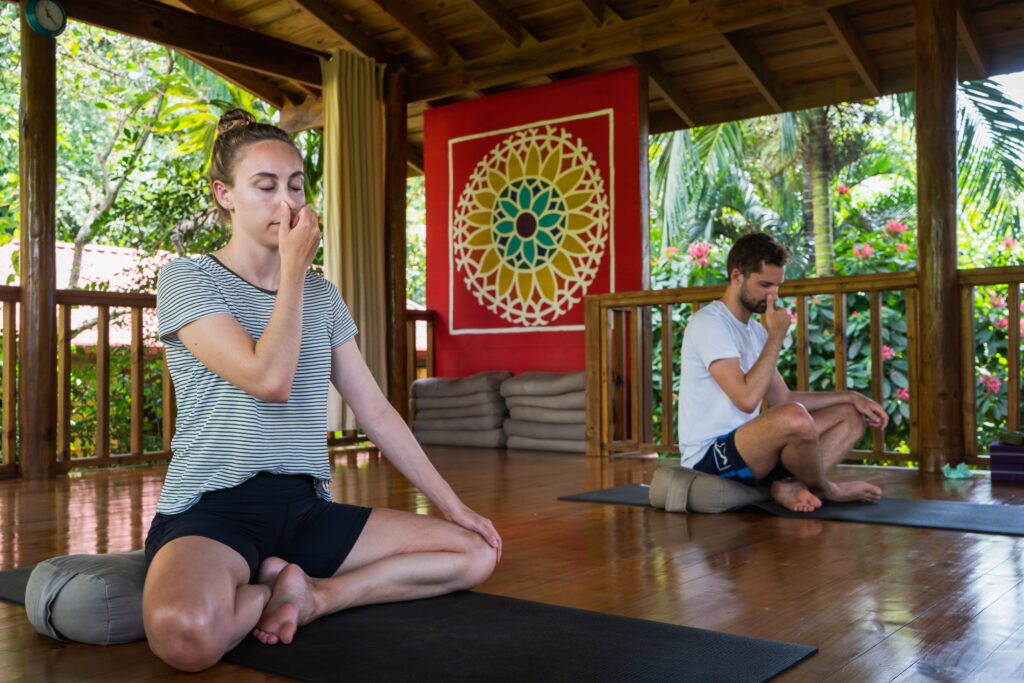
The energetics of speaking and listening
I was born and raised in the colorful, passionate Latin world.
We Latinos are known for being expressive, loud, and cheerful. At family gatherings, everyone talks at the same time — often nobody is really listening. So choosing silence as a conscious practice has been both a challenge and a gift.
“Each word we speak carries weight. Practicing silence allows us to redirect that energy inward — to heal, to reflect, to truly listen.”
We’re taught to fill silence, to smooth over awkwardness, to prove ourselves with our words.
But silence? Silence intimidates.
Redefining speaking and silence
In a heated conversation, staying silent can be seen as weakness — as though you’ve lost the argument.
We’ve become addicted to speaking — often just to ensure we’re heard, to assert that we matter, that we’re smart, strong, or right.
But what if all that speaking is just noise? What if silence is actually the higher expression?
Being silent doesn’t mean we’ve stopped talking, nor does it mean we have nothing left to say. It means we’re learning to quiet the need to respond, to judge, or to control. It shows we have the strength to CHOOSE not to speak.
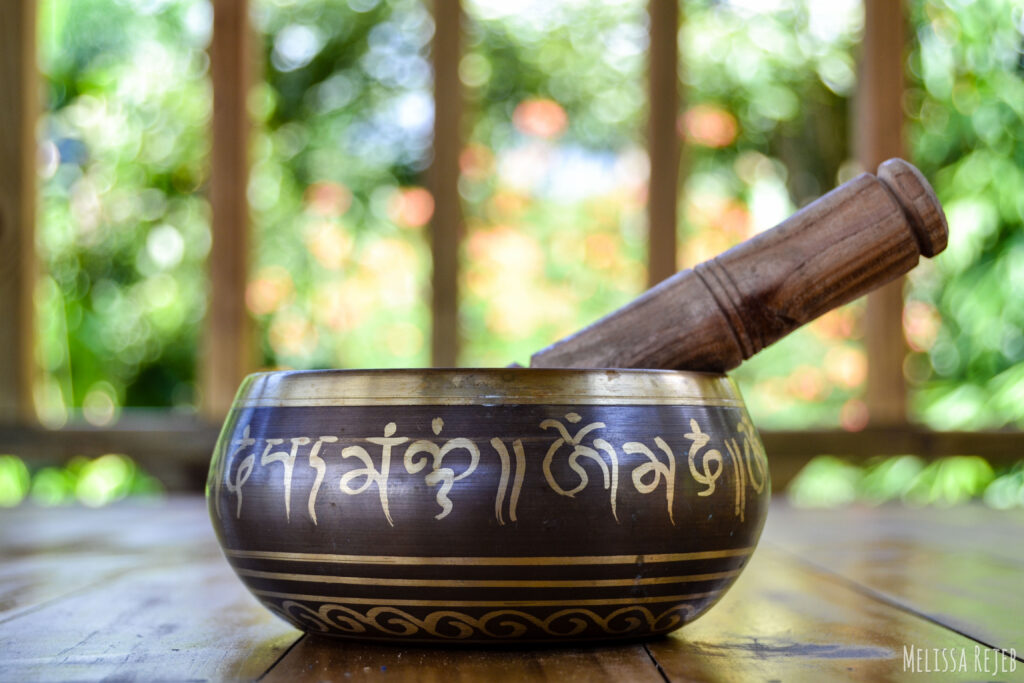
Silence and the mind
Silence isn’t just external — true silence is internal. Even when our mouths are closed, our minds can be loud. Mindful silence invites us to quiet even the inner narrative.
Modern World, Ancient Wisdom
There are many types of silence. And in an age of constant notifications, endless content, and digital noise; silence becomes radical. It’s rare — and sacred.
In a world that encourages us to speak up, post more, and share everything; silence can feel countercultural.
But maybe that’s exactly why it’s essential. Today, we need a new kind of conversation — one about how to use both our silence and our words wisely in this age of information overload. We need to understand that silence often holds more weight than our words do.
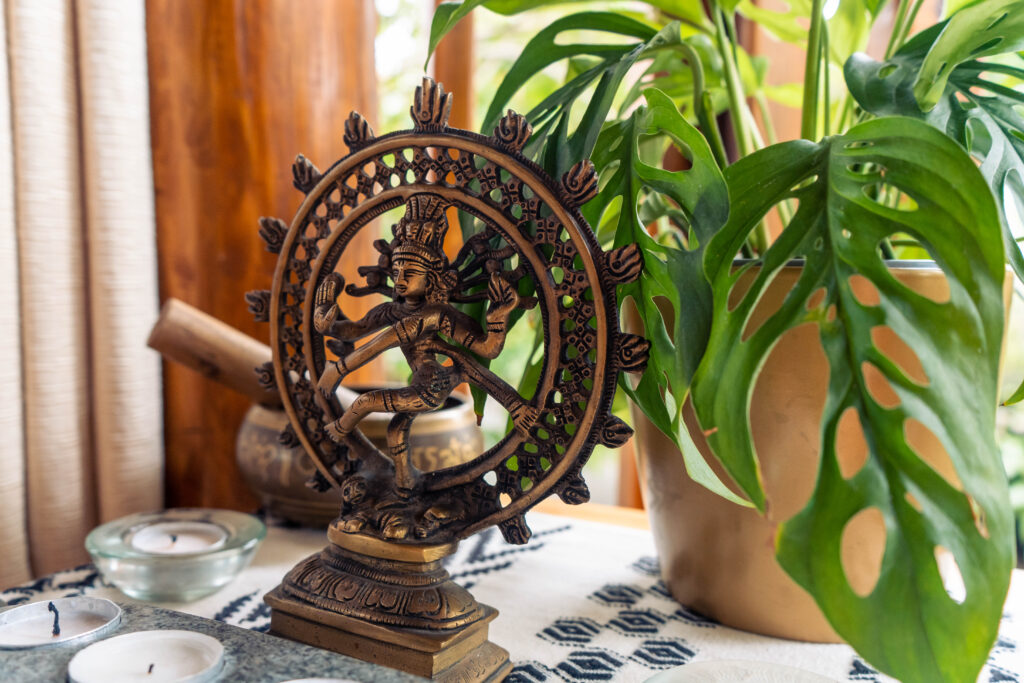
Silence as compassion
Sometimes, silence is the most compassionate thing we can offer. Not everything needs a response. Not every comment needs our opinion.
We often rush to fix, to defend, or to add our voice — but there’s deep kindness in simply holding space.
Our urge to fill silence can rob us of true listening. We’re often so eager to respond that we don’t hear what the other person is really saying.
Have you ever been expressing your frustration or anger about something to someone and they just keep hitting you with ‘solutions’? While this person is surely only trying to help – isn’t it pretty annoying? You just want to be heard. In that moment – the best thing that other person can offer you is silence, agreed?
So having said that, maybe we pause and ask ourselves:
“What would happen if I stayed silent in a moment when I would normally speak? What might I learn about myself, and how might doing that make this person feel?”
Sometimes your strongest response is no response
We’re not saying that you now need to ignore people and never say anything.
What we’re saying is that maybe next time, we pause in the middle of a conversation. Maybe when we feel triggered, we take three deep breaths before responding — and simply observe what happens. No response is MUCH better than an emotion-filled, exasperated response.
This is something most of us have been guilty of, at least once in our lives. Getting triggered, and responding to someone or something immediately – and it’s often not pretty. And when we cool back down and reflect on our interaction, that feeling of “dang, the way I responded really wasn’t necessary” is not fun.
I’ve heard this quote many times, and I never tire of it:
“Before speaking, ask yourself: Is it true? Is it necessary? Is it kind?”
What might shift if we truly integrated this into our daily lives? We may find that choosing silence over reacting, defending, or yelling, can offer us the most freedom and the deepest strength.
The power of practicing Mauna
Not long ago, I came across this beautiful reminder about the power of silence. I keep it on my desktop and try to read it every day. I’m sharing it here in hopes that it speaks to someone else, just as it continues to speak to me:
7 Places to Stay Silent at All Costs:
Be silent if you don’t know the full story.
Be silent when you feel too emotional.
Be silent in the heat of anger.
Be silent if your words can offend someone.
Be silent if your words can destroy a friendship.
Be silent if you can’t talk without yelling.
Be silent if your silence can save a bond.
So if there’s only one thing we leave you with today – it’s the reminder that yoga doesn’t only live on the mat. It lives in the space between our words. Often times, the most powerful pose we can take is silence.
Are you enjoying these insightful explorations into the fascinating ancient science of Ayurveda? We’re thoroughly enjoying sharing Pilar’s takeaways and discoveries throughout her Ayurvedic journey.
Keep your eyes peeled for the next blog of the series, where we discuss Satvritti: The Mind as Medicine. In the meantime, we invite you to check out why the Osa Peninsula is the #4 destination for wellness tourism in 2026!

Your Journey Starts Here
Ready to Finally Experience That Life-Changing Surf + Yoga Trip (Without the Overwhelm)?
Bust the 5 biggest myths about going to a surf and yoga camp so you can stop procrastinating and start catching waves - with our FREE 5-day email course.
Get a Toolkit to Create Calm in Your Inbox
Watch the first lesson from our full immersive course: 8 Limbs of Ashtanga Yoga, FREE!




The Benefits of Pranayama Breathing
Words by Pilar
“When you own your breath, nobody can steal your peace.” ~Author Unknown In the great ocean of knowledge inside the science of yoga, there…

Ask Not “What is Yoga?” but Rather ‘What Does Yoga Mean to Me?’
Words by Pilar
I guess the most common question I receive as a yoga teacher is: what is the meaning of yoga? To sum up and define…
A Yogic Diet
Words by Pilar
It is quite common that once we immerse ourselves in to the world of yoga we begin to wonder about the correct diet to…