Is It Safe to Surf in Costa Rica? Your Guide to Sharks, Crocs, and the Real Local Wildlife
You’ve booked the tickets, packed the reef-safe sunscreen, and you are finally ready to trade the concrete jungle for the warmth of the Costa Rican coast where the wild meets the welcoming. But as the trip gets closer, a quiet hum of anxiety might start mixing with your excitement.
If you spend your days navigating the structured, predictable safety of city life, stepping into the wild, untamed Pacific Ocean can feel deeply intimidating. In fact, there is one specific question that almost every first-time guest brings with them, even if they hesitate to ask it out loud: What about the sharks and the crocodiles? Is it actually safe to be in the water?
At Bodhi Surf + Yoga, we know that fear is simply the anxiety of the unknown. As your surf coaches, our goal isn’t just to teach you how to stand up on a board; it’s to help you feel entirely at home in the ocean. We want to pull back the curtain on the giants you’ve heard about and introduce you to the actual neighbors you’ll see in the lineup. Over the past 20+ years we’ve developed a way of teaching that provides you with a framework to overcome your fears.
“The surfing and the way of teaching really surprised me and helped me to overcome my fear of the sea. The yoga sessions, even with the sounds of the environment, brought me deep relaxation and taught me to make the uncomfortable comfortable.” — Read our other five-star reviews here!
Embracing the wild: The Ocean Guardian’s Mindset
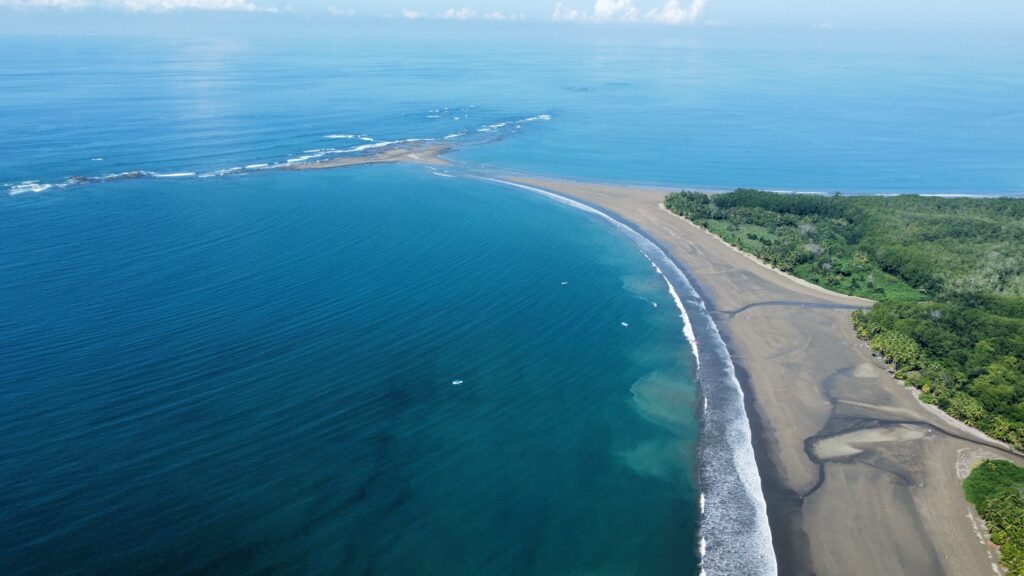
Imagine standing on the shore of Playa Chaman at low tide. The Whale Tail sandbar stretches out like a massive embrace, and the Pacific is a vast, shimmering blue canvas. It is wild, powerful, and utterly indifferent to our schedules. That wildness is exactly why we love it, but it requires a specific mindset.
Safety in the ocean is not the absence of wildlife; it is the presence of knowledge. When we understand the who, what, and where of our marine neighbors, we move from being outsiders looking in to being at home in the swell. As our co-founder Pilar Salazar often says, “When we replace mystery with intimacy, we aren’t afraid of our neighbors anymore, we protect them.”
The Safety Heatmap: Understanding Crocodiles and Sharks
To move past fear, we have to look at the data. We use a Safety Heatmap to help guests understand where different species prefer to spend their time. In Costa Rica, nature has its own borders.
Crocodiles: The Salinity Barrier
The American Crocodile is a staple of Costa Rican imagery. However, safety starts with understanding habitat. Crocodiles are masters of low-energy, brackish environments — think slow-moving river mouths and mangroves. They are not fans of the high-energy, high-salinity environment of the open ocean.
The Marino Ballena National Park is a salt-heavy, high-oxygen environment with consistent wave energy. This is a natural biological barrier for crocodiles. While they are prehistoric marvels, our surf zone is simply not their preferred hunting ground. They prefer the quiet estuaries where the water is still.
Sharks: The Sandy Bottom Reality
Most scary shark species are ambush predators that prefer deep drop-offs, murky river outflows, or steep continental shelves. Our surf zone at Playa Chaman is shallow, sun-drenched, and sandy bottom. Because the bottom is sandy and consistent, there is no place for a large predator to hide, and more importantly, no food source for them in the shallow breaking waves. You are much more likely to see a curious sea turtle, spotted ray, pelicans, and scarlet macaws, than a shark fin. In 20 years of surfing these waters, our team has seen that the ocean here is a nursery, not a hunting ground.
The Daily Realities: Stingrays, Sea Lice, and Needlefish
While people worry about the giants, the real hazards are usually small and passive. Preparation is the antidote to these minor frictions. At Bodhi, we teach you to communicate with the ocean floor.
The Stingray and the Stingray Shuffle
Stingrays are peaceful neighbors who like to nap under a thin layer of sand in the shallow water. They aren’t aggressive; they only react if they are stepped on.
The Protocol:
- Do The Stingray Shuffle: As you enter the water, don’t lift your feet. Slide them along the bottom.
- Send the Signal: You are essentially sending a vibration through the sand that says, “Excuse me, neighbor, I’m just passing through.” If a ray feels you coming, it will simply glide away. It’s a ritual of mutual respect, you say hi, they say bye.
The Agua Mala (Sea Lice & Jellyfish)
Occasionally, the currents bring in “Agua Mala” – seasonal, tiny stinging organisms. They aren’t dangerous, but they can be an itchy distraction.
The Protocol: Wear a rash guard. This physical shield is usually all you need to stay comfortable. And don’t worry about adding another item to your packing list; Bodhi Surf + Yoga provides high-quality, long-sleeve rash guards for all our guests, so you’re covered the moment you arrive. However, if you do get the sea lice inside your rash guard, the next best step is to remove your rash guard and rinse it out. You don’t want to keep the sea lice inbetween your skin and the rash guard.
The Needlefish: A moment of Awe
Sometimes, you’ll see a silver flash – a long, thin fish jumping across the surface. This is a Needlefish.
The Protocol: If one jumps near you, don’t panic. Use it as a moment of awe. Revert back to your breath. Re-center your focus. It’s just a silver arrow reminding you that you are part of a living system.
Sharing the surf lineup: The Magic of your Friendly Neighbors
Once the fear is quieted, you can start to see the gifts of surfing inside the Marino Ballena National Park, Uvita, Osa, in the Southern Zone. This is where you realize you aren’t just visiting the ocean; you are being welcomed by the blue arteries of Costa Rica.
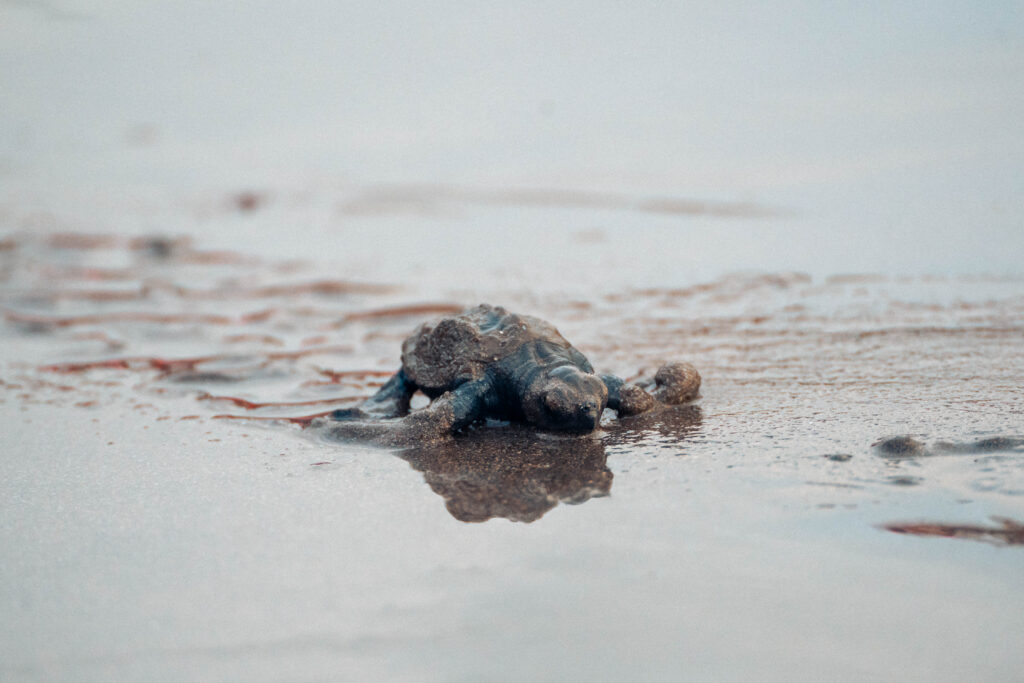
- Sea Turtles: Every now and then you might see an Olive Ridley or Green sea turtle pop its head up just a few feet from the lineup to take a breath or witness a turtle release. It is a moment of pure, quiet magic.
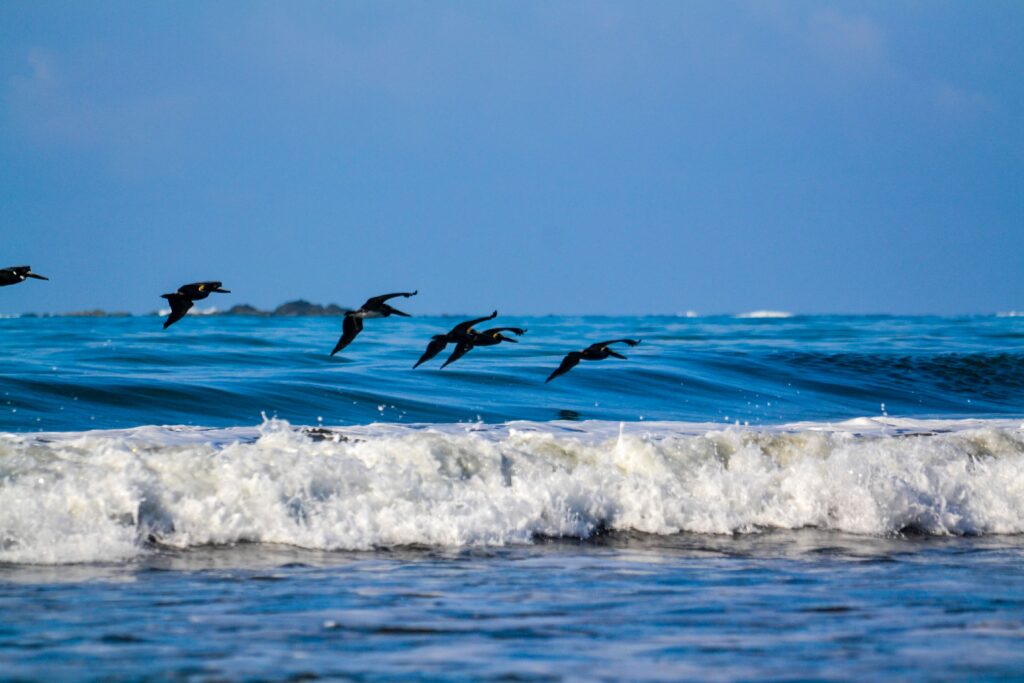
- The Aviators: Watch the Pelicans and Brown Boobies. If they are diving en masse near the break, there is a bait ball of small fish nearby. They are nature’s live-stream, showing you exactly where the energy of the ocean is moving. Some of these aviators are the best surfers that exist. Take the pelicans, for example, they swoop in and glide along the blue face of a wave, their wing tips a few centimeters from the crashing wave.
- Spotted Eagle Rays: On rare, breathtaking days, you might see a ray jump and fly through the face of a wave. They move with a grace that makes even the best surfer look clumsy.
The Giants (Marino Ballena’s Crown Jewels)
If you look past the breaking waves toward the deep blue, you’ll see why this park is a world-class sanctuary. Marino Ballena is famous for the Humpback whales that migrate here from both the Northern and Southern hemispheres. During whale season, it isn’t uncommon to take a boat tour and hear the literal click and song of a whale through the water. It is a frequency you don’t just hear; you feel it in your chest. It reminds you that just a kilometer away, mother whales are nursing their calves in the very same water that is holding you up. If you are fortunate, you might even see a humpback whale breach a few hundred yards from the last rising wave, where the swells begin to take shape. There is no safer feeling than being in a nursery guarded by giants.
Why Playa Chaman is Built for Safe Surfing
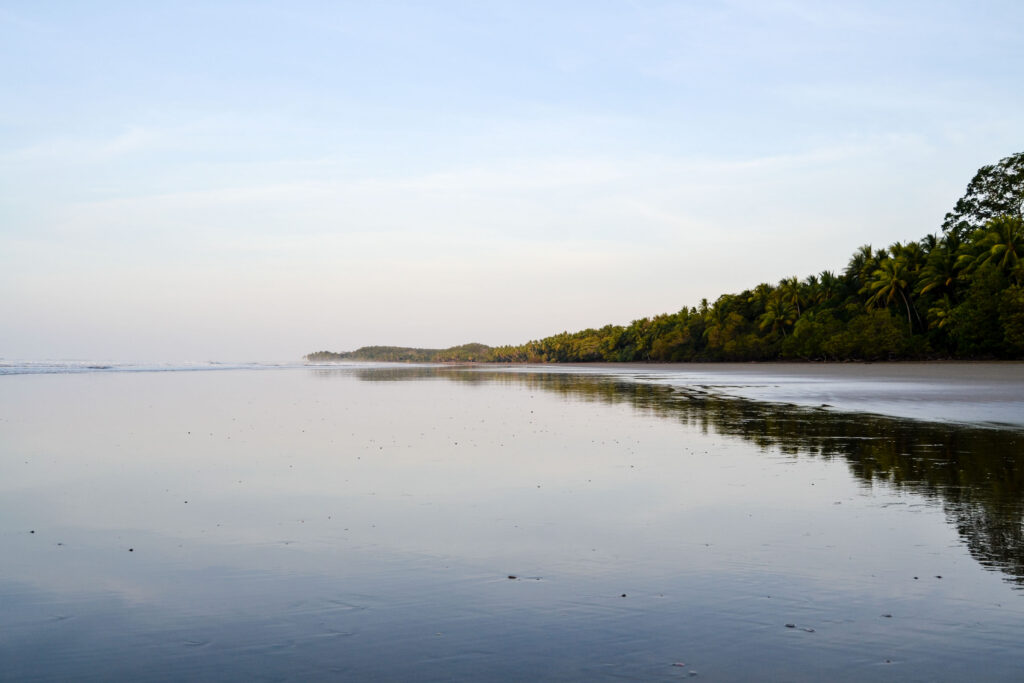
While the wildlife is spectacular, the physical environment of our home break is equally reassuring. Playa Chaman (the specific stretch of beach we surf within the Marino Ballena National Park) is uniquely built for a safe, stress-free learning experience.
- The Sandy Bottom: Unlike many famous Costa Rican breaks that break over sharp, shallow coral reefs or rocky points, Playa Chaman features a soft, forgiving sandy bottom. This means your inevitable wipeouts end with a soft landing, not a scraped knee. These gentle, rolling waves and soft sandy bottoms create an ideal, stress-free sanctuary not just for adult beginners, but for families and young children getting on a board for the first time.
- The Room to Breathe: The beach is massive. We don’t have to fight for space in crowded, aggressive lineups. There is plenty of room for everyone to spread out, focus on their form, and catch waves in peace.
- The Watchful Eyes & The Community Net: What truly sets Playa Chaman apart from the rest of Costa Rica isn’t just the gentle waves – it’s the community. Unlike many popular Costa Rican surf towns that have no lifeguards, chaotic lineups, and fiercely competing surf schools, Marino Ballena is a sanctuary. Because we operate within a National Park, the beach is actively patrolled by Park Rangers and features dedicated lifeguards on duty. But your greatest safety net is the local surf community itself. Our Bodhi Surf + Yoga instructors are highly trained in ocean rescue, and uniquely, the local surf schools here do not compete – we all collaborate. Instructors from all schools watch out for each other and every guest in the water. You are never alone; you are part of a vigilant, caring community.
“It was great taking the first surfing steps in this cozy and safe setting… We were also very fortunate to have had two wonderful surf instructors who took their time and showed a lot of patience with us.” — Read the full review here!
Your Ocean Guardian Checklist
As you prepare for your session, remember that we are guests in their home. Actionable stewardship is the highest form of respect, and it’s also your best safety tool.
- Shuffle In, Shuffle Out: Protect the rays (and your toes).
- Observe the 10-Foot Rule: If a turtle surfaces near you, or you see a release program, give it space to breathe. Don’t try to touch or chase it. Let it be.
- The Pocket Protocol: If you see a piece of plastic floating in the lineup, tuck it into your boardshorts or top. Leave the water cleaner than you found it.
- No Extraction: The shells and sand are the foundation of this habitat. The only thing we take is the Surfer Stoke.
Conclusion: From Mystery to Intimacy
When you first look at the ocean, it can feel like a vast mystery filled with what-ifs. But as you spend time in the water at Bodhi Surf + Yoga, that mystery begins to dissolve. You start to recognize the pelicans by their flight patterns; you learn to anticipate the tides; you understand that the wildlife isn’t a threat — it’s the heartbeat of the place. By knowing the names and habits of your neighbors, you stop being afraid. You start being an Ocean Guardian, a steward of an environment that gives us so much. That is the true meaning of Pura Vida, something our guests experience capture during their 7 or 14 Day Surf + Yoga Camps with us.
If you’re interested in using your vacation as a force for good, check out our blog on how to give back on your vacation!
Frequently Asked Questions
Is the water at Playa Chaman and Punta Uvita safe for beginners and kids?
Absolutely. Playa Chaman is renowned for its gentle, consistent waves, sandy bottom, and protected status within the national park, making it one of the safest and most serene classrooms in Costa Rica. These gentle, sandy-bottom conditions make it ideal for families and children getting on a board for the first time. Along with on-duty lifeguards and Park Rangers, you are supported by our entire local surf community. Bodhi Surf + Yoga instructors are ocean-rescue trained, and all local surf schools collaborate to watch out for every guest in the water.
What is the most common wildlife I’ll see in the water?
While surfing, it’s common to see sea turtles, pelicans diving for a snack, and the occasional leap of a silver arrow needlefish. During migration seasons, you may even see whales breaching in the distance.
How does Bodhi handle ocean safety?
At Bodhi Surf + Yoga, your physical and emotional safety in the water is our absolute foundation. We believe that true ocean safety goes beyond simply keeping an eye on you—it is about empowering you with knowledge and surrounding you with a supportive community. Here is our multi-layered approach:
- Intimate Group Sizes: Guided by our “Small is Beautiful” philosophy, we cap our retreats at 10 guests per week. This ensures a low student-to-instructor ratio so that you receive personalized attention and are never lost in a crowd.
- Empowering Surf Literacy: We don’t just push you into waves; we teach you how to read the ocean. We spend time on the beach and in the water helping you understand how waves break, how to spot and navigate rip currents, and how to respect the local marine ecosystem. Our goal is to give you the confidence and knowledge to be safe in the ocean long after you leave Costa Rica.
- Expert, Rescue-Trained Instructors: Our coaching team consists of seasoned professionals who hold advanced certifications in CPR, first aid, and international ocean rescue.
- The Community Safety Net: You are protected by an entire community. The beach at the Whale Tail is actively patrolled by Park Rangers and dedicated lifeguards. Uniquely, the local surf schools in Bahía Ballena collaborate rather than compete, meaning every instructor in the water is actively looking out for everyone else. When you surf with us, you are embraced by a vigilant, caring community.
Are you ready to find your depth in the silence of the swell?
Book your Bodhi Session today and learn to read the water with the experts!

Feel Confident. Catch Your Own Waves. Learn to Surf. Finally.
Learn to Surf: A Step-by-Step Guide for Beginners
Get our 32 page guide outlining the step by step process we’ve taught 1,000+ students to become confident, self-sufficient surfers.


How to Teach Yourself How to Surf
Words by Carly Stoenner
Learning to surf is more than standing on a board in the ocean. At its core, surfing is a physical, spiritual, and communal practice…
Is Surfing a Sport? And Why it Matters
Words by Carly Stoenner
To quickly answer this question, yes, surfing is a sport according to the International Olympic Committee (IOC). Surfing officially debuted as an Olympic sport…
The Endless Summer(s) Surf Movies
Words by Bodhi Surf + Yoga
American society is greatly influenced by its media outlets, especially movies. Every now and then there comes along a movie that although is a…