As with any new activity you take up, there is always the build-up and excitement of getting some new “toys”. With surfing it’s no different, you will have to decide what surfboard to get. The first thing you’ll probably be inclined to do is research the latest and greatest surfboard technology, and the best surfboard shapers and brands. However, forget about that.
Surfboards for complete beginners
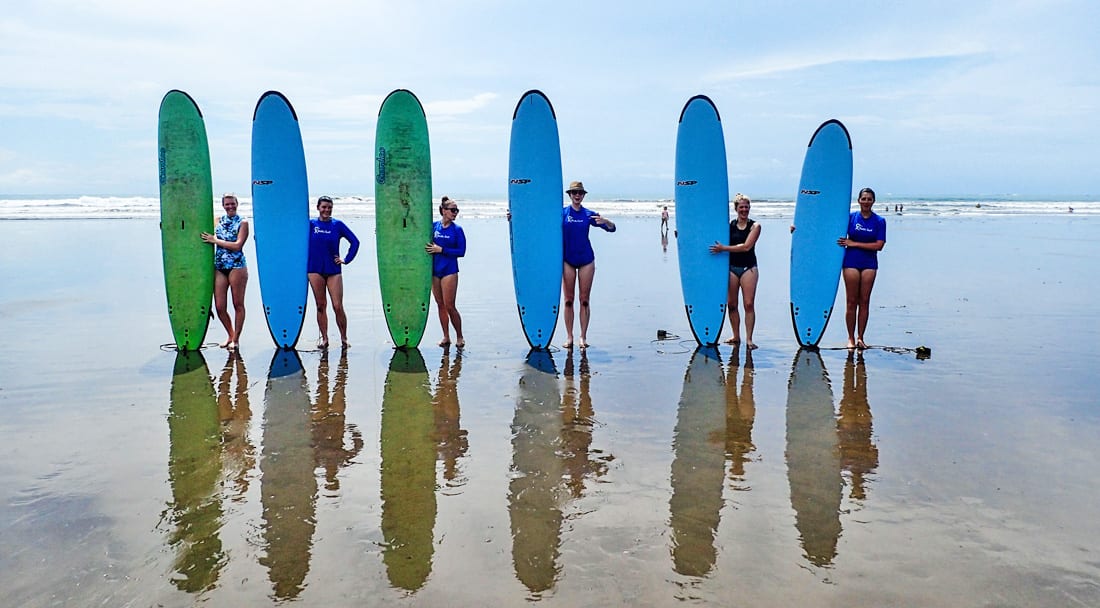
Complete beginners should consider starting out on a soft board, also known as a soft top, soft surfboard, or foam board (not to be confused with the polyurethane foam used for fiberglass surfboards). The greatest advantage for starting out on a softboard is safety, your own safety as well as those around you. New soft boards will run anywhere from $200 to over $400. However, your best bet is to grab a secondhand soft board, you can usually find them on Craigslist for around $100 and in good condition. Soft boards will usually be between 7 and 10 feet long, and you can use the following as a rough guideline:
- 7’-8’ soft board for individuals 140 pounds or less
- 8’-9’ soft board for individuals 140 – 180 pounds
- 9’-10’ soft board for individuals over 180 pounds
The bigger the board, the more flotation it will provide and the easier it will be to get comfortable paddling and standing-up on a surfboard.
Surfboards for beginners with some experience
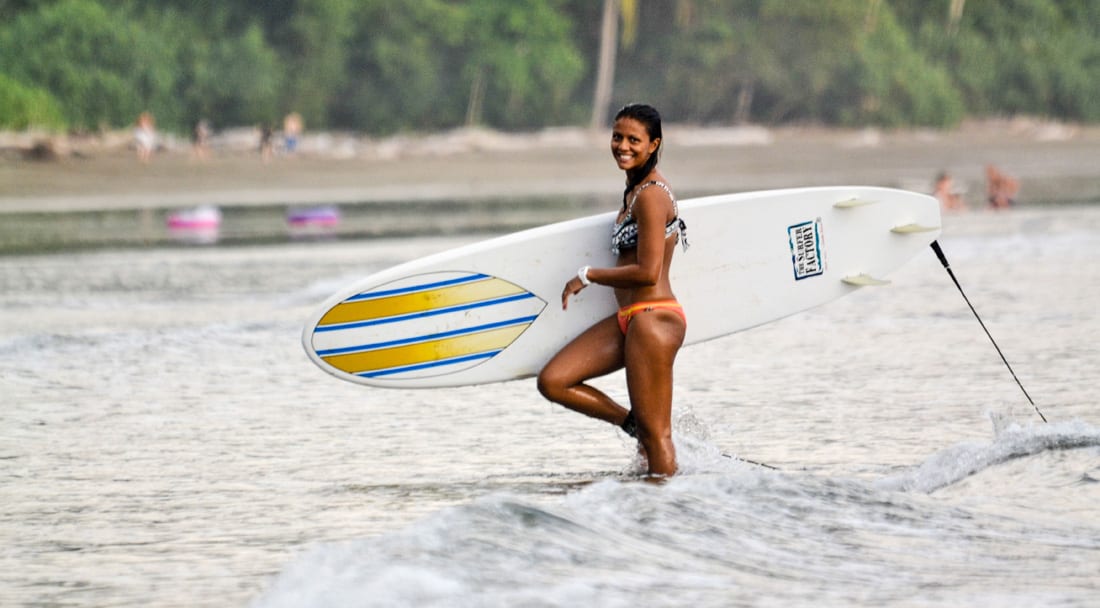
If you have taken a few surf lessons or have some experience, and feel comfortable managing a surfboard in the water, then you’ll probably be better served by having a fiberglass surfboard. The ideal board size will vary according to each individual’s height, weight, and ability level, but taking the aforementioned guideline can be a good starting point (note: the board’s volume is what provides the flotation so it’s necessary to take into account other dimensions such as width and thickness). The trend has always been to go short, but most beginners never get past the initial stages because trying to learn on a shortboard becomes frustrating. Beginners need a surfboard with substantial volume in order to have the necessary flotation to help them progress during the initial phases, and while you may see surfers on extremely short boards and think it’s cool, this will not help you overcome the learning curve.
As with any other hobby or activity, we can’t help but find out what the “best” brands are. However, surfboards do not last forever, and during the learning process it is impossible for a beginner to notice a difference between how two surfboards perform, making the brand completely obsolete. Again, it is a good idea to look at buying your first few boards used. Surfboards are quite fragile and can take some time getting used to handling them with care, so save yourself some money and get something that works instead of something that “looks good”.
Rather than consider the brand, or make, of the surfboard, pay attention to the condition of it. If the board has turned a yellowish color it means the board has been exposed to the sun a lot. If there are soft spots, places where the fiberglass has come unattached from the foam. then the board either has a hole where water is seeping in or if it looks water-tight then the board had a ding and has become water-logged because the water was not allowed to dry-out before having the ding sealed.
Things To Take Away
In summary here are the most important points for beginners to take away from this post:
- Buy used
- Forget about brand, make, or shaper
- Condition of the surfboard is most important
- Don’t start out on a shortboard, no matter how cool you think it looks
If you are interested in learning how to surf, we urge you to, at the very least, take a lesson or two. In fact, we believe that it’s important to dedicate an entire week to learning — give you some skills and knowledge you wouldn’t get by teaching yourself and will help you on the path to having a safe and fun experience surfing. At Bodhi, we specialize in week-long intensive surf and yoga camps, the aim of which are to teach you the necessary skills and knowledge and have you perfect them under the watchful eye of a qualified surf instructor.
For First-Time Surfers
You Don't Need Experience. You Don't Need Gear. You Just Need This.
Our free 5-day email course that reveals the 5 myths keeping beginners at "I'm not ready" instead of catching their first wave and finding inner peace-and how to overcome them fast.
The Newbie Surf + Yoga Camp Kickstarter
Bust the 5 biggest myths about going to a surf and yoga camp so you can stop procrastinating and start catching waves - with our FREE 5-day email course.




How to Teach Yourself How to Surf
Words by Carly Stoenner
Learning to surf is more than standing on a board in the ocean. At its core, surfing is a physical, spiritual, and communal practice…
Is Surfing a Sport? And Why it Matters
Words by Carly Stoenner
To quickly answer this question, yes, surfing is a sport according to the International Olympic Committee (IOC). Surfing officially debuted as an Olympic sport…
The Endless Summer(s) Surf Movies
Words by Bodhi Surf + Yoga
American society is greatly influenced by its media outlets, especially movies. Every now and then there comes along a movie that although is a…