
I walked into the University of San Diego with a very specific, very rigid version of the future in my head. At eighteen, I thought I had the default path all figured out. I planned to study economics, master the art of the spreadsheet, and land a job on Wall Street where I would eventually find myself shouting orders on the floor of the stock exchange.
No joke!
I liked numbers because numbers were clean. They were logical. They were the universal language of success. But then, I walked into an Introduction to Anthropology class, and my neat, orderly world started to get a little messy.
The Great Campus Divide
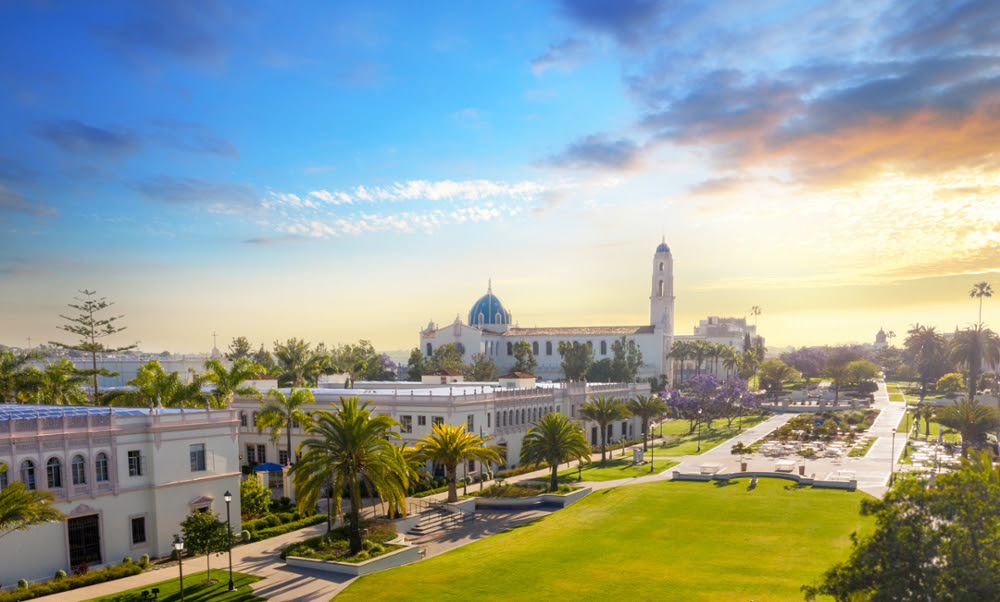
Back then, my life was split between two polar opposite worlds on campus. On one side, I was in my economics classes. These were rooms filled with button-down shirts and crisp slacks. The air was thick with talk of market volatility, marginal utility, and the relentless pursuit of growth. Everything was viewed through a quantitative lens. If you could not measure it in a ledger, it simply did not exist.
Then, I would cross the campus to my anthropology classes. The vibe shifted instantly. Suddenly, I was surrounded by people in sandals and earth tones. Dividends were no longer the topic of discussion. Instead, we talked about culture, language, kinship, and deeply held human values, ultimately exploring the “why” behind the “what.
I will be honest: I did not quite fit in either world. In the economics building, I felt like I was searching for a soul that was not allowed in the room. In the anthropology department, I felt like the numbers guy trying to justify the mechanics of survival.
But it was in that tension, the space between the spreadsheet and the sandal, that the seed for Bodhi Surf + Yoga started to grow.
Economics vs. Anthropology: The Shared Question
What really hit me during those college years was a realization that most people miss. Economics and anthropology are actually asking the same questions, but using different lenses.
Both disciplines are trying to understand human choices. One looks at “how much,” while the other looks at “for what reason.”
Anthropology explores how people live and why they make the decisions they do. It asks what a society values and how they build meaning together. Economics, at its most basic, is the study of scarcity and how we allocate limited resources.
When you marry the two, you realize that true wealth is not just a number on a balance sheet. It is the ability to allocate your time, energy, and resources toward things that create genuine connection and positive impact. I started to wonder: if business is just a vehicle for human choice, why can we not build a business around values instead of just volume?
Protecting a Way of Life
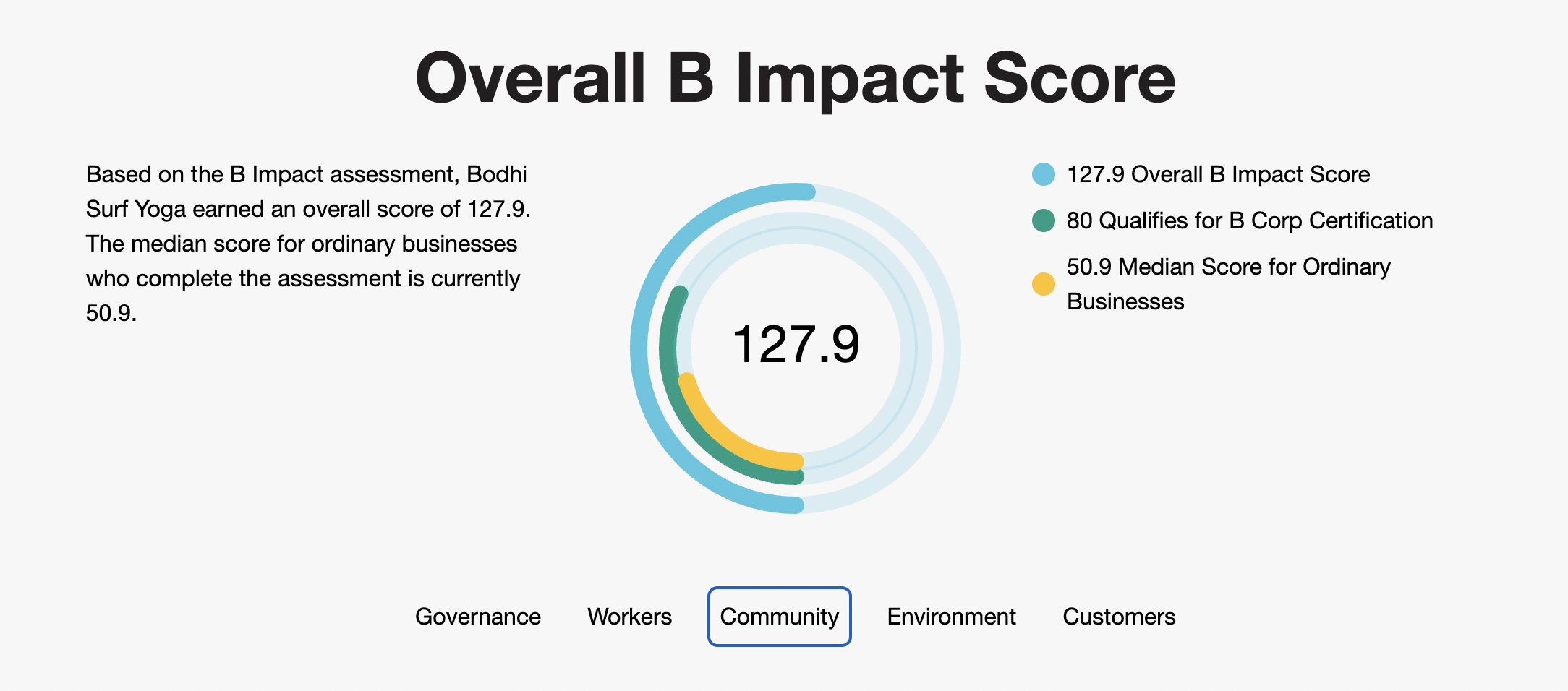
At Bodhi, we often say that we are a B Corp by nature, not just by paper. That anthropology class gave me the lens to see that a business should not just be a machine that extracts profit. It should be an organism that protects a way of life.
When we talk about our “bottom line,” we are not just looking at the top-line revenue. We are looking at the anthropology of our community in Uvita. We have to ask the hard questions:
- Are we honoring the local culture and the rhythm of Bahía Ballena?
- Are we being intentional about what we grow and, more importantly, what we choose not to grow? This is why we chose not to build more bungalows even when the market told us to expand.
- Are we using our resources to buy someone “time, a shot, or hope,” just like I realized as a seven-year-old hauling trash?
This is the anthropology of business. It is the realization that every transaction is a social interaction. Every dollar spent is a vote for the kind of world you want to live in.
Choosing the Hard Path of Meaning
The default path in the travel industry is simple: scale up, build more, and maximize occupancy. But the anthropological lens taught me that once you dilute the culture and the connection, you lose the meaning that people are actually searching for.
For many of you, the struggle is often the same. You might feel that same disconnect I felt on the university campus. You know the numbers matter, but you can feel that the values are being left out of the conversation.
We built Bodhi Surf + Yoga to prove that you do not have to choose between the button-down and the sandals. You can have a business that is financially sustainable because it is rooted in human values, not in spite of them.
Looking Beyond the Metrics
In our previous stories, I talked about the importance of being a “quitter” when it comes to identities that no longer serve you. Those choices were not made using an economics textbook. They were made using an anthropological lens.
We asked ourselves: how will this decision affect the rhythm of our family, our community, and our guests? How will it impact the Pura Vida essence and the Small is Beautiful philosophy we are trying to transmit?
When you look at your own life or career, I challenge you to ask the same questions we explored in that classroom decades ago:
- What truly shapes your decisions?
- What do you value when no one is looking at the spreadsheet?
- How are you building meaning in your daily work?
Conclusion: The Lens is Yours
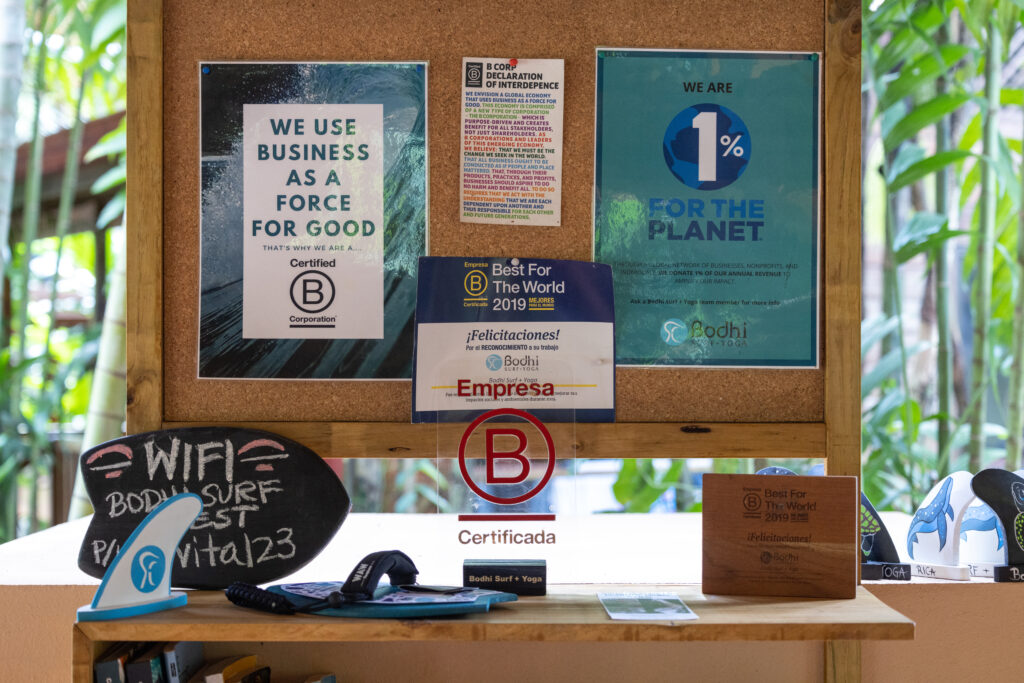
I did not walk away from university with a perfect business plan. I walked away with a different lens. That lens is what allowed us to pursue B Corp certification and legally commit to being a force for good. It is what allows us to look at a guest not as a customer, but as a future Engaged Ocean Steward.
Business does not have to be just about spreadsheets and salaries. It can be about protecting the things that make life worth living. 🌊☀️
Are you ready to see the world through a different lens? Join us in Costa Rica for a surf and yoga retreat where we do not just talk about values. We live them. Book your transformative journey today.
Frequently Asked Questions about Values-Based Business
How does anthropology relate to modern business?
Anthropology helps businesses understand the human element. It focuses on the culture, values, and social impacts of decisions. In a values-based business model, this means prioritizing the well-being of all stakeholders and the health of the environment alongside financial profit.
What is a “B Corp by nature”?
This means a business operates with social and environmental responsibility as its core DNA from the very beginning. Rather than just adopting these practices to get a certificate, it is about the natural instinct to do good and protect the community.
How can I apply these principles if I do not own a business?
You can apply a values-based lens to your career by identifying one social or environmental problem you can impact with your specific skills. This might mean donating a small percentage of your time or choosing to work only with organizations that align with your ethical standards.
Why is the “Small is Beautiful” philosophy important for values?
Staying small allows us to maintain the integrity of our values. When a business scales too quickly, the personal connections and cultural nuances often get lost. By staying small, we can ensure every guest experience is authentic and every community interaction is respectful.

For First-Time Surfers
You Don't Need Experience. You Don't Need Gear. You Just Need This.
Our free 5-day email course that reveals the 5 myths keeping beginners at "I'm not ready" instead of catching their first wave and finding inner peace-and how to overcome them fast.




The Benefits of Pranayama Breathing
Words by Pilar
“When you own your breath, nobody can steal your peace.” ~Author Unknown In the great ocean of knowledge inside the science of yoga, there…

How to Teach Yourself How to Surf
Words by Carly Stoenner
Learning to surf is more than standing on a board in the ocean. At its core, surfing is a physical, spiritual, and communal practice…

Ask Not “What is Yoga?” but Rather ‘What Does Yoga Mean to Me?’
Words by Pilar
I guess the most common question I receive as a yoga teacher is: what is the meaning of yoga? To sum up and define…